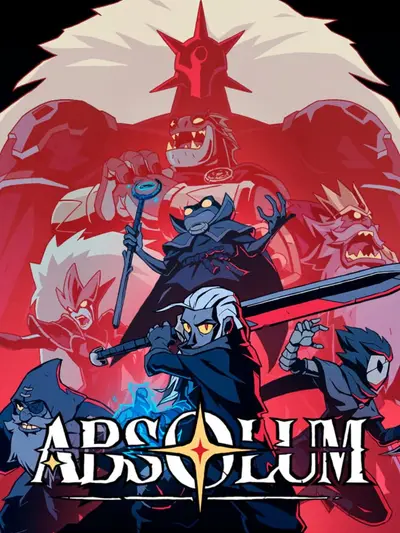
Absolum
84Quick answer
Quick answer
Absolum is een verrassend sterke mix van beat-'em-up en roguelite, met strakke gevechten, veel variatie en een wereld die uitnodigt om telkens terug te keren. De eerste uren vragen wat geduld, maar zodra de systemen openklappen, blijft het spel heerlijk meeslepend. Niet alles aan de progression en herhaling is even elegant, maar de kern is zo goed dat de game lang blijft hangen.
84: een sterke, soms wat stugge mix van brawler en roguelite die vooral uitblinkt in gevechtsgevoel en stijl.
A beat ’em up with roguelite ambition
Absolum is the kind of game concept that can fall apart very quickly on paper. Side-scrolling beat ’em ups thrive on immediacy, tactile feedback, and a sense of mastery that grows from repetition. Roguelites, meanwhile, are built around repetition for a different reason: failure, adaptation, and gradual progression. Combine the two, and you risk diluting what makes each genre special. Absolum avoids that trap by understanding that these systems do not need to cancel each other out. Instead, they can reinforce one another. The result is a game that feels less like a compromise and more like a confident fusion.
From the opening moments, Absolum makes a strong impression. Its fantasy setting has personality, its pacing is brisk without being overwhelming, and it introduces its mechanics with enough restraint to let the fundamentals breathe. You are not buried under menus, upgrades, or jargon before you have even thrown a punch. Instead, the game wants you to feel the weight of a hit, the importance of a dodge, and the satisfaction of a clean combo first. That slower reveal is one of the game’s smartest choices, because it lets the deeper systems land with more force later on.
Combat that feels good from the first hit
The combat is the heart of Absolum, and it is excellent. The basic controls are easy to grasp, but the game has far more depth than the opening hours initially suggest. The four playable characters are not just cosmetic alternatives; they genuinely change how you approach fights. Each one handles speed, reach, pressure, and momentum in a distinct way, which immediately gives the game replay value. You are not simply replaying the same brawler with a different model on top.
What makes the fighting so satisfying is the way it rewards aggression without becoming mindless. You can keep enemies on the back foot, extend combos, and turn a messy encounter around with smart movement, but the game still expects you to read the battlefield carefully. The best moments come when you split a crowd, avoid a dangerous attack, and then seize control with a short, explosive burst of damage. It feels responsive, precise, and genuinely physical in the way only a strong brawler can.
That responsiveness matters because Absolum often throws multiple threats at you at once. Enemies attack from different angles, pressure builds quickly, and the screen can become chaotic if you stop paying attention. The game’s strength is that it still gives you the tools to feel in control. A well-timed dodge, a clean counter, or a perfectly placed strike can completely change the flow of a fight. When everything clicks, Absolum delivers that rare feeling of being both reactive and dominant at the same time.
Four characters, four ways to play
One of the smartest things Absolum does is refuse to flatten its cast into interchangeable options. The four characters each bring a different rhythm to the game. One may favor speed and sustained pressure, another heavier impact and commitment, while others lean toward spacing, control, or mobility. That variety matters a great deal in a game built around repeated runs, because it keeps the experience from becoming mechanically stale.
It also changes how you think about the roguelite structure. Choosing a character is not just about selecting a moveset; it is about selecting a style of problem-solving. Some runs may push you toward aggressive builds that reward constant forward motion, while others encourage patience and careful positioning. That interplay between character identity and build variety gives Absolum a strong sense of momentum. You are always adapting, but you are also always learning how your chosen fighter wants to operate.
This is where the game’s design starts to feel especially thoughtful. It does not hand you a single optimal path and then punish you for deviating from it. Instead, it gives you enough structure to feel grounded and enough flexibility to experiment. That makes the game especially appealing for players who enjoy testing different approaches and seeing how far they can push a build. A run can feel radically different depending on your character and the upgrades you find, which is exactly what a good roguelite should deliver.
Roguelite structure with real purpose
Absolum’s roguelite layer is not just there to stretch the game out. It shapes the entire rhythm of progression, failure, and return. New abilities, upgrades, and run-specific variations make each attempt feel meaningfully distinct. Not every choice is equally exciting, and not every build will come together in a dramatic way, but the game consistently gives you enough variables to keep each run interesting. That sense of uncertainty is part of the appeal. You are always chasing a stronger version of your character, but you never know exactly how the next attempt will unfold.
That said, the early hours can feel a little slow. Absolum does not immediately hand you the full breadth of its systems, and that means the opening stretch can seem more restrained than the game’s best moments deserve. Progression can feel a bit cautious at first, as if the game is waiting to show you its full hand. Some players will appreciate that gradual buildup; others may find it a little withholding. Either way, it is a real part of the experience.
Once the loop opens up, though, the structure starts to make much more sense. The game becomes about more than simply clearing stages. It becomes about understanding enemy behavior, learning the world, and making deliberate choices about how to shape your build. That gives the repetition a stronger purpose than in many roguelites. Still, there is a limit to how much variety the structure can generate on its own. Eventually, some patterns become familiar, and certain enemies and environments start to feel a little too well known. The game remains polished, but the repetition is noticeable.
A world worth returning to
What helps Absolum stand apart from many genre mash-ups is that it invests in its world as much as its mechanics. Talamh is not just a backdrop for combat; it feels like a place the developers wanted you to care about. The setting has enough texture and identity to make repeated visits feel worthwhile, which is especially important in a roguelite where the same spaces may be seen again and again. The game understands that repetition is easier to accept when the world itself has personality.
The characters contribute a lot to that sense of place. Absolum does not treat its cast as disposable run fodder. Conversations, interactions, and the general tone of the writing give the game a stronger emotional anchor than many action games in this space manage. That matters because roguelites can easily become mechanical. Here, the worldbuilding helps keep the experience grounded in something more than just systems and numbers. You are not only chasing better runs; you are spending time in a fantasy setting that wants to be remembered.
The story is not always the game’s strongest element, and it occasionally feels less ambitious than the world around it. But even when the narrative is not pushing hard, the atmosphere keeps pulling you forward. Absolum knows that a strong setting can do a lot of heavy lifting, especially when the gameplay loop is built around repetition. The result is a game that feels more alive than many of its peers.
Presentation that sells every blow
Visually, Absolum is a standout. The art direction gives the game a distinct fantasy identity without leaning too heavily on generic medieval imagery. Characters are readable, enemies have strong silhouettes, and the environments are colorful enough to feel memorable without sacrificing clarity. That clarity is crucial in a game like this, where the action can get hectic and you need to understand threats at a glance. Absolum handles that balance beautifully.
The audio work is just as effective. Hits have weight, attacks have presence, and the soundtrack supports the action with enough energy to keep the pace high. The game sounds good in motion, which is a bigger deal than it may seem. In a brawler, the difference between a merely functional hit and a satisfying one often comes down to sound design and animation timing. Absolum gets both right, and that makes the combat feel even better than it already does on paper.
Technically, the game is also very solid. Animations are smooth, the action remains readable, and the presentation consistently supports the gameplay rather than distracting from it. That polish matters because it helps the game maintain its momentum. Even when a run starts to feel familiar, the moment-to-moment experience remains lively enough to keep you engaged.
Where the cracks show
For all its strengths, Absolum is not flawless. The opening hours can be a little slow, and the progression curve is not always perfectly balanced. At times, you may wish the game rewarded your skill a bit faster or gave you more immediate variety. In those moments, the roguelite structure can feel like it is getting in the way of the direct, skill-driven action that makes beat ’em ups so appealing in the first place. The game is rarely frustrating, but it can be stubborn.
Repetition is the other obvious limitation. Because the core loop is so central to the design, some familiarity is inevitable. After a while, certain enemies, rituals, and route patterns begin to feel well worn. The game does enough to keep that from becoming a deal-breaker, but it never fully escapes the genre’s structural limitations. That is the trade-off for making a roguelite out of a brawler: the loop has to stay compelling even when the novelty fades a little.
Even so, it is hard not to admire how clearly the developers understand what they are trying to achieve. Absolum is not a cautious experiment. It is a confident attempt to make two genres work together in a way that feels natural, stylish, and mechanically satisfying. That ambition pays off more often than not.
Conclusion
Absolum is a highly successful blend of beat ’em up immediacy and roguelite structure. Its combat is sharp and responsive, its four characters offer real variety, its world has personality, and its presentation is consistently strong. The first few hours ask for patience, and the repetition can become noticeable over time, but the core experience is so polished and so enjoyable that those issues never outweigh the positives. This is a game that understands both of its parent genres and uses that understanding to build something memorable.
If you enjoy action games that reward timing, adaptation, and experimentation, Absolum is easy to recommend. It is stylish, satisfying, and more thoughtful than many games in either genre. Most importantly, it makes repeated runs feel worth taking.
Verdict
Absolum is een geslaagde genreblend die vooral schittert wanneer de gevechten en progressie elkaar versterken.
At a glance
Pros
- Strakke, responsieve combat met veel impact
- Vier personages die echt anders aanvoelen
- Sterke artdirection en uitstekende sfeer
- Roguelite-opbouw geeft runs duidelijke variatie
Cons
- De eerste uren vragen wat geduld
- Herhaling en progressie zijn niet altijd even soepel
Screenshots
More reviews
Other recent game reviews on GAME-scanner.
There are no other reviews to show yet.