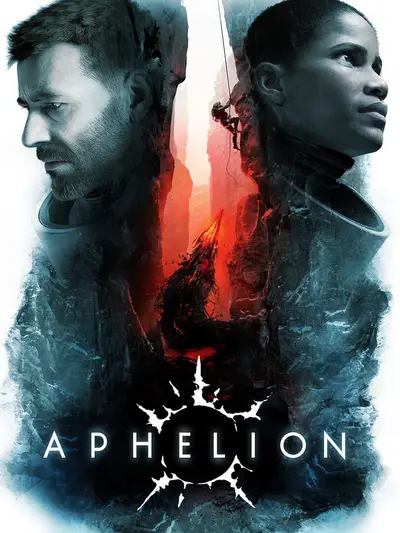
Aphelion
58Quick answer
Quick answer
Aphelion is een sfeervolle sci-fi-avontuurgame die vooral indruk maakt met zijn ijzige setting, sterke presentatie en een verhaal dat inzet op menselijke verbondenheid. Tegelijkertijd blijft de gameplay vaak te veilig en te repetitief, waardoor de reis minder spannend is dan de premisse belooft.
58/100 — sterk in sfeer en emotie, maar te repetitief en veilig om hoger te eindigen.
Aphelion opens with a premise that immediately does the heavy lifting: astronaut Ariane is stranded on a frozen, hostile planet and must rescue her wounded partner Thomas before the environment claims them both. It is a classic sci-fi setup, but one that works because the game understands what makes it compelling. Aphelion is not trying to be a sprawling galaxy-saving epic. It is trying to tell a smaller, more intimate survival story about endurance, grief, and the stubborn refusal to leave someone behind.
That focus is one of the game’s biggest strengths. The frozen world feels harsh, lonely, and indifferent, and the presentation does a lot to sell that mood. The empty horizons, the muted palette, and the constant sense of exposure make the planet feel like an active threat rather than a backdrop. From the outset, Aphelion makes it clear that this is a game about vulnerability. You are not here to dominate the environment; you are here to survive it long enough to reach the person who matters most.
The emotional core helps the premise land. The relationship between Ariane and Thomas gives the story its weight, and whenever the game slows down enough to let that connection breathe, it becomes genuinely affecting. The mission feels personal rather than abstract. Instead of saving a world, you are trying to save one life, and that narrower scale gives the journey a human intensity that many bigger sci-fi adventures never quite achieve. When Aphelion is at its best, that intimacy is what makes it memorable.
A frozen world that does the storytelling
Aphelion’s strongest asset is its atmosphere. The planet is not just a place to move through; it is a constant source of pressure. Every open stretch of snow, every jagged climb, and every abandoned structure reinforces the sense that Ariane is somewhere she was never meant to be. The game understands how to use silence as tension. It does not fill every moment with noise or spectacle. Instead, it lets the cold, the wind, and the emptiness do the work.
The visual design supports that approach beautifully. The environments are often striking, with a strong sense of scale that makes the planet feel both majestic and merciless. There is a cinematic quality to the framing and pacing of many scenes, and that helps the game maintain a strong identity even when the mechanics are less exciting. The contrast between the beauty of the landscape and the danger it represents is one of Aphelion’s most effective ideas.
Sound design is just as important. The crunch of snow, the hiss of machinery, the muffled ambience of the environment, and the subtle musical cues all reinforce the feeling of isolation. The game knows that a hostile world becomes more convincing when it feels alive in small, unsettling ways. Even when little is happening mechanically, the audio keeps the tension simmering. It is one of the reasons the game’s mood remains so consistent.
Gameplay that plays it too safe
The problem is that the gameplay rarely matches the strength of the setup. Aphelion blends exploration, climbing, traversal, and stealth, but the result is more competent than exciting. The core loop is easy to understand and rarely confusing, yet it also rarely evolves in ways that keep the experience fresh. Many sections feel like slight variations on the same idea, which makes the pacing feel repetitive long before the game has fully run its course.
Movement matters a great deal in a game like this, because every climb and every crossing is supposed to reinforce the danger of the world. Here, though, traversal often feels functional rather than thrilling. The climbing mechanics are serviceable but not especially convincing, and the game does not always give them enough fluidity to make them satisfying on their own. Instead of feeling like a dramatic struggle against the environment, movement can start to feel like a necessary bridge between story beats.
The stealth sections suffer from a similar problem. They create pressure, but they do so in familiar ways that do not develop much over time. There is tension in being exposed and vulnerable, but the design does not always add enough tactical depth or variation to keep those moments engaging. Rather than escalating the challenge, the game often repeats the same basic rhythm. That makes the stealth feel less like a highlight and more like a brake on the momentum.
Repetition and mechanical restraint
One of Aphelion’s biggest issues is how often it repeats itself. The game clearly has a strong sense of tone, but it is less confident when it comes to mechanical evolution. Once you understand the structure of a given section, the game tends to return to that structure without adding enough new ideas to keep it fresh. The result is a sense of predictability that gradually weakens the tension.
That repetition is especially noticeable because the game leans so heavily on the same combination of cautious movement, limited interaction, and controlled danger. There is nothing inherently wrong with that formula, but a longer experience needs more variety to sustain interest. Aphelion often chooses safety over experimentation. It rarely takes the kind of mechanical risks that could have made its world feel more dynamic or its challenges more memorable. As a result, the game is easy to admire, but harder to feel genuinely surprised by.
That said, the structure is not without merit. There are moments when the game’s rhythm clicks, and the blend of exploration, survival, and story-driven scenes creates a satisfying flow. In those stretches, Aphelion feels like it understands exactly when to let the player breathe and when to tighten the screws. But those moments are too inconsistent. Too often, the game settles back into familiar patterns before it has fully capitalized on its own strengths.
Story first, systems second
If Aphelion remains compelling despite its mechanical limitations, it is because the story carries so much of the experience. The game is at its strongest when it centers Ariane and Thomas and uses the frozen planet to make their bond feel tangible. That gives the adventure a human scale that suits its premise perfectly. The best scenes are not necessarily the loudest or most dramatic; they are the ones that make the mission feel emotionally costly.
That human focus is what separates Aphelion from more generic sci-fi action-adventure games. The planet may be vast and indifferent, but the real tension comes from the relationship at the center of the story. Can Ariane reach Thomas in time? Can she keep going when every step is harder than the last? Those questions are simple, but they are effective, and they give the game a sincerity that goes a long way.
Still, the story is not immune to the same restraint that affects the gameplay. The characters are easy to understand, but not always developed with enough force to make every dramatic beat hit as hard as it could. Some scenes feel like they are reaching for emotional impact without quite committing to it. The result is a story that is touching and grounded, but occasionally held back by its own caution.
Conclusion
Aphelion is a game with clear strengths and equally clear limitations. Its atmosphere is excellent, its frozen world is beautifully realized, and its emotional focus on Ariane and Thomas gives it a strong human center. The presentation, from the visuals to the sound design, does a lot of heavy lifting and often makes the game more compelling than its mechanics alone would suggest. As a sci-fi mood piece, it frequently lands the right notes.
But as an action-adventure game, it plays things too safe. The gameplay is solid but repetitive, and the climbing and stealth sections lack the variety and fluidity needed to keep the experience consistently engaging. The result is a game that feels more memorable in concept and atmosphere than in moment-to-moment play. For players who value tone, intimacy, and a grounded emotional premise, Aphelion is easy to appreciate. For those hoping for more inventive systems or a stronger mechanical payoff, it may leave them wanting more.
In the end, Aphelion is a moody, often beautiful journey across a dead world, held together by human connection and undermined by caution. It reaches for something heartfelt and effective, and it often succeeds in the moment, but it never quite escapes the gravity of its familiar design.
Verdict
Aphelion is een sfeervol avontuur met een sterk hart, maar te weinig mechanische scherpte om echt te schitteren.
At a glance
Pros
- Sterke sci-fi-sfeer en ijzige wereldopbouw
- Emotionele focus op de relatie tussen Ariane en Thomas
- Mooie presentatie met overtuigende omgevingen en sound design
Cons
- Gameplay blijft te veilig en te repetitief
- Klim- en stealthsecties missen variatie en soepelheid
Screenshots
More reviews
Other recent game reviews on GAME-scanner.
There are no other reviews to show yet.