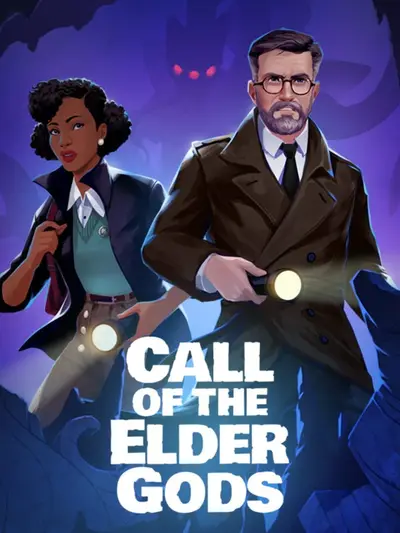
Call of the Elder Gods
78Quick answer
Quick answer
Call of the Elder Gods is een sfeervolle Lovecraftiaanse puzzelavontuur die vooral uitblinkt in zijn wereld, schrijfwerk en slimme, gelaagde raadsels. De game is niet altijd even strak in tempo en sommige puzzels kunnen de vaart breken, maar de reis zelf blijft intrigerend tot het einde.
Ik geef Call of the Elder Gods een 78 omdat de sfeer, het schrijfwerk en de puzzels sterk genoeg zijn om de tempo- en ontwerpfrictie grotendeels te overstijgen.
Call of the Elder Gods is the kind of sequel that knows exactly what made its predecessor work, then doubles down on those strengths with confidence. Rather than treating Lovecraftian material as a nonstop barrage of dread, it approaches the mythos as a mystery adventure: eerie, curious, and often unexpectedly intimate. That tonal choice gives the game a distinct identity. It is less interested in making you fear the unknown than in making you want to understand it.
That distinction matters, because this is a game built around atmosphere, character, and the slow satisfaction of solving problems that feel rooted in the world itself. The journey takes you to remote places and strange corners of the Earth, but the real appeal is the way those locations, puzzles, and conversations all feed into a larger sense of discovery. Call of the Elder Gods is not trying to overwhelm you with spectacle. It wants to pull you deeper, one clue at a time.
A world that feels carefully lived in
The first thing that stands out is the game’s sense of place. Its environments are not just backdrops for puzzle solving; they are carefully staged spaces with personality, history, and a subtle undercurrent of unease. Every new location feels like it has a story to tell before a single line of dialogue is spoken. That makes exploration rewarding even when you are not immediately sure what you are looking for, because the world itself is doing so much of the storytelling.
The art direction deserves a lot of credit here. This is a game that understands the value of strong visual identity over raw technical flash. The presentation is often beautiful, with memorable set pieces and compositions that make each scene feel deliberate. Yes, there are visible technical limitations in places, but they rarely undermine the experience because the artistic intent is so clear. The game knows how to make a place feel uncanny without turning it into a generic horror set.
The soundtrack complements that approach well. It supports the mood without crowding it, adding just enough tension and melancholy to keep the atmosphere alive. Together, the visuals and music create a coherent tone that is one of the game’s biggest assets. Even when the pacing slows, the world remains compelling enough to keep you engaged.
Puzzles with texture and purpose
If the atmosphere is the hook, the puzzles are the backbone. Call of the Elder Gods is at its best when it asks you to think laterally, compare clues, and make connections across different parts of the environment. These are not disposable obstacles. They are often layered challenges that reward patience and careful observation, and they tend to feel satisfying because the logic behind them is usually fair, even when it is not immediately obvious.
What makes the puzzle design especially effective is the way it evolves over the course of the campaign. The game does not simply repeat the same idea in different rooms. Instead, it gradually expands the complexity of its challenges, introducing new twists and combinations that keep the experience fresh. That progression gives the adventure a strong sense of momentum, at least when the game is firing on all cylinders.
When a puzzle clicks, it clicks beautifully. There is a real pleasure in reaching that moment where scattered clues suddenly align and the solution feels obvious in hindsight. The game understands the value of that “aha” moment and builds toward it well. It is the sort of design that makes you feel clever without being patronizing.
Still, the challenge curve is not perfectly smooth. Some puzzles overstay their welcome, either because the solution is a little too opaque or because the game’s pacing makes the process of getting there feel slower than it should. Those moments can interrupt the flow, especially if you prefer adventure games that keep moving briskly. The game is rarely unfair, but it can be demanding enough to test your patience.
Writing, characters, and emotional weight
One of the most pleasant surprises in Call of the Elder Gods is how human it feels. The writing gives its characters enough personality that they never come across as mere vehicles for exposition. Their conversations have warmth, wit, and a sense of lived-in familiarity that makes the journey more engaging. Even when the story is dealing with ancient forces and cosmic implications, the emotional center remains grounded in people.
That grounding is crucial. Lovecraftian stories can sometimes become abstract to the point of emotional distance, but this game avoids that trap by focusing on relationships, memory, and the personal cost of confronting the unknown. There is a poetic quality to the way it handles its themes, especially when it touches on grief and the way people carry the past with them. Those ideas are not just decoration; they give the story a real sense of purpose.
The dual-protagonist setup is a good idea, though it does feel somewhat underused. There are moments where the structure hints at richer interplay than the game ultimately delivers, both mechanically and narratively. That is a shame, because the concept has obvious potential. Even so, the writing is strong enough that this reads more as a missed opportunity than a major flaw. The characters still carry the experience, and their banter often provides some of the game’s most memorable moments.
Tone and pacing
One of the smartest choices Call of the Elder Gods makes is refusing to lean too hard on fear. Instead, it embraces a more adventurous tone, one that values curiosity and wonder as much as unease. That makes the game feel more approachable than many Lovecraft-inspired titles, but it does not make it less effective. If anything, the lighter touch gives the darker elements more room to breathe.
The downside is that the pacing can occasionally feel uneven. Because the game likes to linger on dialogue and atmosphere, a difficult puzzle can slow things down more than you might expect. When you are stuck, the momentum can dip noticeably. That is the main trade-off for the game’s deliberate rhythm: it gives scenes room to resonate, but it also means frustration can last a little longer than ideal.
Fortunately, the overall structure is strong enough that these dips do not derail the experience. The game keeps offering enough intrigue, visual variety, and narrative texture to pull you forward. Even when it is not moving at its best pace, it remains interesting.
Verdict
Call of the Elder Gods is a rewarding puzzle adventure with a strong sense of identity. Its Lovecraftian setting is handled with confidence, its writing gives the characters real personality, and its puzzle design is smart enough to make progress feel earned. It is not flawless: some puzzles drag, and the dual-protagonist idea could have been pushed further. But the strengths are substantial and consistent.
What lingers after the credits is the game’s atmosphere and the care behind it. This is a sequel that builds on its foundation without losing sight of what made that foundation appealing in the first place. If you enjoy narrative-driven adventures that ask you to think, observe, and piece together meaning from fragments, Call of the Elder Gods is an easy recommendation. It may not be the most punishing or the most explosive game in its genre, but it is one of the more memorable and thoughtfully crafted ones.
Verdict
Een sfeervolle en slimme puzzelavontuur die zijn kleine haperingen ruimschoots compenseert met karakter en mysterie.
At a glance
Pros
- Sterke Lovecraftiaanse sfeer met een eigen toon
- Slimme, gelaagde puzzels die goed opbouwen
- Schrijfwerk en personages geven het verhaal veel karakter
Cons
- Sommige puzzels remmen het tempo te hard
- De dual-protagonist-opzet blijft wat onderbenut
Screenshots
More reviews
Other recent game reviews on GAME-scanner.
There are no other reviews to show yet.