Cralon
49Quick answer
Quick answer
Cralon probeert een klassieke dungeon crawler te zijn met een sterke sfeer, verkenning en een duidelijke old-school ambitie. Daar staat tegenover dat de gevechten stroef aanvoelen, de techniek wankel is en het geheel vaak meer potentie dan afwerking laat zien.
49/100 — de sfeer en verkenning zijn sterk, maar de haperende combat en technische ruwheid drukken het geheel duidelijk naar beneden.
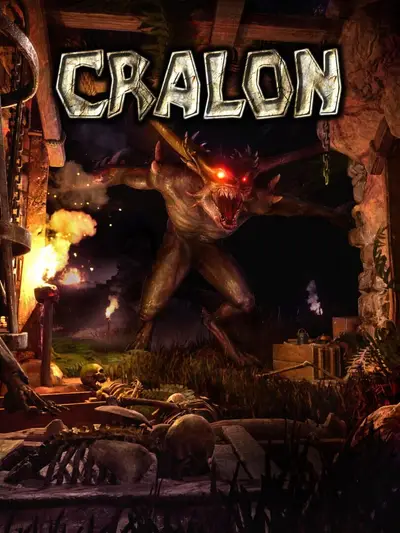
Cralon is the kind of game that makes its intentions clear from the first minutes: a compact, old-school dungeon crawler with RPG and adventure elements, built around descending, scavenging, surviving, and slowly understanding a hostile underground world. On paper, that is a very appealing pitch. You are dropped into an old mine deep beneath the surface, where darkness, strange creatures, and hidden passages combine into a place that feels both inviting and dangerous. Cralon is not trying to overwhelm you with spectacle; it wants you to feel like you have entered a forgotten, threatening environment where every corner might conceal something useful or lethal.
That foundation works better than you might expect. Cralon understands why classic dungeon crawlers still have an audience: curiosity, scarcity, and the satisfaction of uncovering a route that initially seemed impossible. The game rewards players who inspect walls, take detours, and resist the urge to rush through spaces. There is a nice tension in exploring the mine, especially in the early hours, when you are still learning what kinds of threats, resources, and quests might be waiting around the next bend.
A mine built on atmosphere
The strongest thing Cralon has going for it is its atmosphere. The setting has a dusty, old-school charm that immediately recalls the classic fantasy dungeons that helped define the genre, but translated into an underground mine that feels rougher, tighter, and more oppressive. Narrow tunnels, dark chambers, and unexpected openings constantly suggest danger. Even when nothing is happening, the place rarely feels safe.
That atmosphere is not just carried by the art direction, but by the way the game lets you move through the space. Cralon is at its best when it allows you to wander, search, and connect the dots yourself. A blocked passage here, a hidden route there, a small item that becomes important later: these are the kinds of discoveries that give a dungeon crawler meaning. The game has a good sense of underground geography, which helps make the mine feel like a place you are unraveling rather than simply clearing room by room.
Exploration as the core loop
Exploration is the part of Cralon that feels most convincing. The game gives you enough room to read the environment and rewards careful players with useful finds and new routes. That creates a satisfying sense of organic progress. You are not constantly being pushed toward big setpieces or loud objectives; instead, the environment itself keeps pulling you forward. That suits a game about descending into a mine where knowledge matters just as much as equipment.
The RPG and adventure layers also help provide structure. The world does not feel like a random chain of corridors, but like a place with goals, obstacles, and reasons to revisit earlier areas. Quests give direction, while crafting and resource gathering reinforce the survival fantasy. You are not just fighting to move ahead; you are planning, collecting, and deciding what to carry with you. In a genre where scarcity often drives tension, that is a smart fit.
Still, Cralon tends to be most effective when it lets you discover things at your own pace, and less effective when it asks you to act under pressure. The game clearly has ideas about how exploration, progression, and reward should support one another, but not every system is equally polished. As a result, the pacing can swing from purposeful and rewarding to rough and undercooked depending on the stretch you are in.
Combat that interrupts the flow
The biggest problem in Cralon is combat. Where exploration and atmosphere often work together, the fighting lacks the precision and clarity this kind of system needs. Attacks do not always feel satisfying, enemies can be awkward to read, and the feedback during encounters is too vague to inspire confidence. That means a battle can shift from tense to frustrating very quickly, especially when the controls or timing do not seem to cooperate.
That is a serious issue because this kind of game depends on reliability. A dungeon crawler does not need to be fast or flashy, but the player should feel that actions respond consistently. When that does not happen, every fight becomes a small interruption rather than part of the tension. In Cralon, that happens too often. The game asks for patience, but it does not always reward that patience with a combat system that feels smooth or satisfying.
The combat issues also affect the rest of the experience. Because you are constantly expected to stay alert in a hostile environment, any moment of uncertainty stands out. A good fight can deepen the tension of a dangerous mine; an awkward one pulls you out of it. Cralon spends too much time in that second category.
Systems, progression, and reward
What Cralon does well is give the player a sense of direction. The RPG and adventure layers mean you are not just wandering aimlessly through the mine. There is usually a reason to revisit a room, take a detour, or return to an earlier location. That gives the world a sense of cohesion and keeps the game from becoming a string of disconnected corridors.
Crafting and resource management also strengthen the survival fantasy. You are constantly weighing what you need against what you can afford to leave behind. That kind of decision-making fits a game where the environment itself is already hostile enough. When Cralon clicks, it creates a nice balance between risk and reward. The problem is that the rewards do not always feel substantial enough to justify the effort. The game has the right ingredients, but it does not always combine them into something fully satisfying.
Presentation and polish
Visually, Cralon has a distinct identity, largely thanks to its bleak mine setting. The game is not trying to impress with gloss or excess; it wants character and mood. That works when the environments do their job and make the underground feel forgotten and dangerous. The tone is consistent too: grounded, grim, and free of unnecessary flash.
But presentation is also where the cracks become hard to ignore. Technical and polish issues repeatedly interrupt the flow of the experience and make the rough edges of the design more visible than they should be. Animations, feedback, and stability do not always feel solid enough to carry the atmosphere. In an indie project, some imperfections are easy to forgive; here, they accumulate into a noticeable drag on the game.
That is why Cralon often feels more like a promising concept than a fully realized release. The ambition is easy to see, and the core idea is strong, but the execution does not always keep up. As a result, the charm of the setting sometimes remains potential rather than conviction.
Verdict
Cralon is not a failure, but it is also not a game I can recommend without reservations. It has a clear vision, a moody setting, and enough classic dungeon-crawler spirit to make genre fans curious. The mine setting is strong, exploration feels meaningful, and the RPG structure gives the world enough shape to keep you engaged. At the same time, the technical issues and uncertain combat are too visible to make the whole package truly convincing.
If you are willing to accept some friction in exchange for atmosphere, discovery, and an old-fashioned underground journey, there is enough here to hold your attention. If you want tight combat, clear feedback, and solid technical execution first, Cralon spends too much time showing its potential instead of fully delivering on it. It is a game with a good idea at its core, but one that never quite escapes the feeling that it is still digging its way toward the version it wants to be.
Verdict
Cralon is een interessante maar te ruwe dungeon crawler die vooral liefhebbers van sfeer en verkenning zal aanspreken.
At a glance
Pros
- Sterke, sfeervolle mine-setting met duidelijke old-school charme
- Verkenning en ontdekking voelen betekenisvol en belonend
- De RPG- en adventure-elementen geven de wereld structuur en doel
Cons
- Gevechten missen precisie en kunnen frustrerend aanvoelen
- Technische en presentatieproblemen halen de vaart uit de ervaring
Screenshots
More reviews
Other recent game reviews on GAME-scanner.
There are no other reviews to show yet.