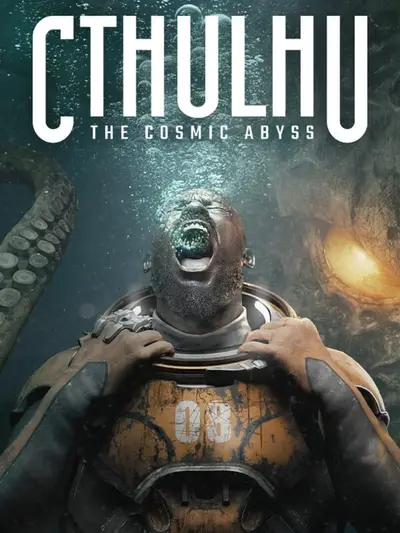
Cthulhu: The Cosmic Abyss
74Quick answer
Quick answer
Cthulhu: The Cosmic Abyss is een sfeervolle Lovecraft-detectivegame die vooral schittert wanneer je aanwijzingen ontleedt, omgevingen scant en puzzels stap voor stap ontrafelt. De spanning en het wereldbeeld zijn sterk, maar technische haperingen en een tweede helft die minder overtuigt houden het net onder echt topniveau.
Mijn score van 74 weerspiegelt een zeer geslaagde, sfeervolle avonturengame met slimme puzzels, maar ook genoeg frictie en een minder sterke tweede helft.
Cthulhu: The Cosmic Abyss is exactly the kind of game that knows it is not trying to thrill you with speed, but with dread. This is a slow, methodical descent into a sealed-off undersea disaster where science, occultism, and cosmic horror keep colliding until none of them feel fully trustworthy anymore. You are not a gun-toting action hero carving a path through monsters. You are an investigator, and the game is at its best when it makes that role feel both intellectually satisfying and deeply unsettling.
The premise is immediately strong. A mining station in the Pacific abyss is no longer responding, and your job is to uncover what happened in the depths. That setup gives the game a natural sense of isolation and pressure. Every corridor feels cut off from the world above, every flickering light feels temporary, and every sound seems to travel too far in the dark. The setting does a lot of heavy lifting, but the game deserves credit for understanding how to use it. The ocean is not just backdrop here; it is part of the threat.
Investigation as the core fantasy
The main appeal of Cthulhu: The Cosmic Abyss is its investigation loop. You search rooms, inspect objects, read logs, piece together clues, and slowly build a picture of what went wrong. That process is satisfying because the game usually asks you to think rather than simply follow instructions. It wants you to compare evidence, notice inconsistencies, and decide which details matter. When a mystery game gets that balance right, the act of solving becomes the reward, and this game often understands that very well.
There is also a pleasing sense that your tools matter without solving everything for you. Modern scanners, sonar, and other investigative aids help reduce the frustration of old-school pixel hunting, but they do not replace reasoning. You still need to interpret what you find. That makes the experience feel like real detective work rather than a guided tour. The best moments come when a room full of scattered information suddenly clicks into place and you realize the game has been quietly teaching you how to read its world.
Still, the investigation can become overly fiddly. At times the game asks you to scan too thoroughly, and that can slow the pace to a crawl. Searching every corner of a room is atmospheric for a while, but if the clues are not signposted cleanly enough, the tension starts to curdle into frustration. The game is strongest when it makes you feel clever; it is weakest when it makes you feel like you are wrestling with the interface or hunting for a tiny interaction point instead of following the mystery.
Puzzles that fit the horror
When the puzzle design is on point, it is one of the game’s biggest strengths. Several of the challenges are inventive and, more importantly, thematically integrated. They do not feel like arbitrary locks placed in your path. They feel like extensions of the environment and the story. That matters a great deal in a Lovecraftian game, where the best puzzles should deepen the sense that you are uncovering something ancient, unstable, and not meant for human understanding.
The strongest puzzles also benefit from the game’s futuristic framing. The blend of advanced technology and eldritch unease creates a distinctive rhythm. You are using rational tools to investigate irrational phenomena, and that tension gives the game a memorable identity. It is a smart idea to place classic cosmic horror inside a more modern investigative framework, because it lets the game explore both the procedural side of detective work and the emotional collapse that comes from realizing the truth may be bigger than your mind can comfortably hold.
Not every puzzle lands with equal elegance, though. Some solutions are a little too dependent on careful scanning or trial-and-error, and that can make the experience feel more laborious than it should. The game occasionally confuses thoroughness with depth. When that happens, the pacing suffers. You are still solving mysteries, but the process becomes less elegant and more mechanical than it ought to be.
Pacing, structure, and the second half
The early hours are where the game makes its strongest impression. The setup is compelling, the atmosphere is thick, and the story keeps offering just enough information to keep you leaning forward. Each new discovery feels like it opens a larger wound in the mystery. That slow escalation works because the game understands that cosmic horror is often more effective when it is implied, then gradually confirmed, rather than dumped on the player all at once.
Unfortunately, the back half is less consistent. The story loses some cohesion, and the momentum established early on does not always carry through to the end. There are still interesting ideas later in the campaign, and a few chapters show real flashes of ingenuity, but the overall arc becomes less compelling. The tension that should be tightening starts to loosen instead, and the final stretch does not fully capitalize on the promise of the opening.
That unevenness is the game’s biggest structural issue. It is not that the second half is devoid of good moments; it is that the game stops feeling as sharply focused as it does at the start. For a mystery-driven horror game, that matters a lot. If the narrative stops pulling you forward with confidence, the whole experience can feel less urgent, even if the individual pieces remain interesting.
Atmosphere and presentation
Where Cthulhu: The Cosmic Abyss remains consistently effective is in its atmosphere. The undersea station is a great horror location because it naturally combines isolation, confinement, and the fear of the unknown. The game uses that to full effect. Its corridors, machinery, lighting, and environmental details all reinforce the feeling that you are trapped in a place that is slowly becoming less human. The visuals are not just decorative; they are part of the storytelling.
The Lovecraftian influences are also handled with more care than simple fan service. The game does not just scatter references and call it a day. Instead, it folds the mythology into the environment, the documents, and the logic of the investigation. That gives the world a sense of depth. It feels like a place where occult history and futuristic industry have collided in a way that was never going to end well.
The lack of combat is another important part of the presentation. By refusing to turn the game into a conventional action-horror experience, it keeps the focus on vulnerability. You are not meant to dominate this environment. You are meant to survive it by understanding it, and even that may not be enough. That design choice strengthens the tension more often than not.
Technical rough edges
As strong as the atmosphere is, the game is not always as polished as it needs to be. Technical issues and awkward moments occasionally break immersion. Sometimes the problem is a minor bug or a clumsy interaction. Sometimes it is simply the game being too vague about what it wants from you. None of these issues completely derail the experience, but they do add friction to a game that already asks for patience and attention.
That is unfortunate because this is the sort of horror adventure that depends on flow. When you are fully absorbed, the game can be genuinely gripping. When you are stopped by a technical hiccup or an unclear objective, the spell breaks quickly. The rough edges do not destroy the game, but they do keep it from feeling as refined as its best ideas deserve.
Verdict
Cthulhu: The Cosmic Abyss is a smart, atmospheric detective horror game with a strong identity and several excellent ideas. Its investigation mechanics are engaging, its setting is memorable, and its best puzzles are both clever and thematically satisfying. It captures the feeling of Lovecraftian unease better than many games that rely more heavily on spectacle.
But it is also uneven. The second half is less cohesive, some sections become too fiddly for their own good, and technical rough edges occasionally interrupt the mood. That keeps it from becoming a truly great horror mystery, even though it comes close in its strongest moments. For players who enjoy slow-burn investigation, cosmic horror, and a game that trusts you to do the thinking, this is well worth the dive.
Verdict
Een sterke, sfeervolle horror-detective die veel goed doet, maar niet helemaal zijn volle potentieel haalt.
At a glance
Pros
- Sterke Lovecraft-sfeer en een overtuigende onderwaterlocatie
- Slimme onderzoeksmechanieken die echt aanvoelen als speurwerk
- Meerdere inventieve puzzels met goede thematische koppeling
- De afwezigheid van actie versterkt de spanning en kwetsbaarheid
Cons
- Soms te veel gepriegel en scannen, wat het tempo breekt
- De tweede helft van het verhaal is minder strak en overtuigend
- Technische haperingen en onhandige momenten halen je uit de sfeer
Screenshots
More reviews
Other recent game reviews on GAME-scanner.
There are no other reviews to show yet.