Kumitantei: Old-School Slaughter
78Quick answer
Quick answer
Kumitantei: Old-School Slaughter zet meteen een sterke toon neer met een sfeervolle retro-anime look, een intrigerende moordmysterie-opzet en een cast die snel tot leven komt. De card-battler-invulling geeft het bekende death-game-formaat een eigen smaak, al voelt niet elk systeem al even uitgewerkt. Als eerste episode is dit vooral een veelbelovende, soms wat ruwe start.
78: sterk in sfeer, cast en mysterie, maar de experimentele systemen en uitleg houden het nog net onder de echt uitblinkende klasse.
A familiar setup with a sharper edge
Kumitantei: Old-School Slaughter wastes little time establishing its pitch: an elite school, a trapped class of students, and a deadly experiment where science, manipulation, and paranoia all feed into one another. On paper, that may sound comfortably familiar to anyone who has spent time with death-game stories, but the game is not interested in simply replaying a known formula. Instead, it uses the framework as a launchpad for its own identity, combining retro-anime styling, class tension, and a mystery structure that mixes investigation with card-based confrontation.
What stands out first is how deliberately the atmosphere is built. The school is not just a setting; it is a pressure cooker. The students are introduced in a way that makes every exchange feel loaded, as if everyone is either hiding something, performing for the room, or calculating their next move. That gives the opening a strong pulse. Even before the main mystery fully kicks into gear, the game has already made it clear that trust is fragile and that every conversation could become a threat.
Investigation that asks you to pay attention
The core loop revolves around gathering clues, piecing together motives, and using that information to expose lies during debates. That works well because the game does not treat the player as a passive reader. It wants you to observe carefully, remember details, and connect information across scenes. In a genre that often lives or dies on the strength of its twists, that active involvement matters. Kumitantei gives deduction real weight, and it is satisfying when a small detail you noticed earlier suddenly becomes the key to a confrontation later on.
The debate structure is where the game tries to do something a little different. The card-battler layer turns evidence and counterarguments into a more tactical system, giving the confrontations a rhythm of investigate, prepare, and strike. When it works, it adds a nice sense of momentum to the usual visual-novel trial format. You are not just selecting the right line of dialogue; you are building toward a decisive moment and then using the right piece of evidence at the right time.
That said, this is also the area where the first episode shows its roughest edges. The idea is strong, but the mechanics do not yet feel fully refined. Some interactions are a little awkward, and the game does not always explain itself as clearly as it should. The result is a system with promise that occasionally feels more experimental than polished.
A cast built for conflict
The cast is one of the episode’s biggest strengths. The students are introduced with enough personality to make them easy to distinguish, and more importantly, they are arranged in a way that encourages friction almost immediately. Some are abrasive, some are guarded, some are openly strange, and some seem to be hiding behind a carefully constructed image. That variety gives the group a lively social texture, which is exactly what a story like this needs.
It also helps that the writing understands the importance of making the trapped students feel like people rather than placeholders. A death-game story becomes much more effective when you care about the dynamics between the characters, not just the mystery itself. Here, the relationships are messy enough to be interesting from the start. You can feel alliances forming, egos clashing, and suspicions spreading before the first major case has even fully settled in.
That social energy gives the story momentum. Even when the plot is still laying groundwork, the cast keeps the episode moving because every interaction feels like it could matter later. The game clearly wants you to keep track of who says what, who reacts how, and who seems to benefit from the chaos.
Retro-anime style that does real work
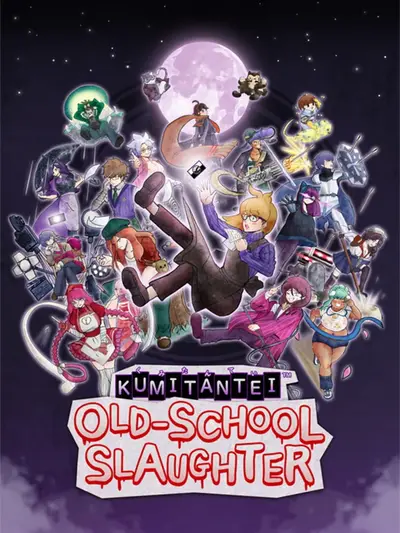
Presentation is another major reason the episode lands as well as it does. The retro-anime art direction is not just a nostalgic flourish; it gives the game a clear visual identity. Character designs are expressive, scenes are easy to read, and the whole package feels cohesive in a way that supports the tone. There is a strong sense that this world has been designed to feel both stylized and uneasy.
The sound design deserves equal credit. Music and effects do a lot of heavy lifting in the suspense scenes, helping the game maintain tension even when the dialogue slows down. The audio gives the confrontations extra bite, while the visuals keep the atmosphere memorable. Together, they make the episode feel more confident than many first entries in episodic mystery projects.
That confidence matters because the game spends a lot of time on conversation and deduction. When the presentation is strong, those scenes feel sharper and more engaging. Even when the mechanics stumble, the atmosphere keeps pulling you forward.
Where the systems still need work
The main weakness is polish. The card-based debate system is interesting, but it does not yet feel fully tuned. There is a good idea at the center of it, yet the execution can be a little clumsy, which matters in a game that depends so much on timing and clarity. When a mechanic is meant to heighten tension, any confusion can work against the drama instead of supporting it.
The tutorialization is also too vague at times. The game does not always do enough to teach you how its systems fit together, and that can make the learning curve feel steeper than necessary. Players already comfortable with this kind of mystery structure will probably adapt, but newcomers may find the onboarding a bit abrupt. In a story-driven game, that kind of friction is especially noticeable because it interrupts the flow of the investigation.
Still, these are problems of refinement rather than concept. The foundation is solid, and the episode makes it easy to see why the series could become something special if later chapters build on this opening with more confidence and clarity.
Verdict
Kumitantei: Old-School Slaughter is a promising first episode with a strong mood, a memorable cast, and a mystery structure that knows how to hook you. It is not fully smooth yet, especially on the systems side, but the foundation is solid and the ambitions are easy to appreciate. If the later episodes build on this opening with more confidence and better mechanical clarity, this could become something special.
Verdict
Een veelbelovende, stijlvolle eerste episode die zijn ruwe kanten niet verbergt, maar wel genoeg karakter heeft om te blijven hangen.
At a glance
Pros
- Sterke retro-anime sfeer en duidelijke visuele identiteit
- Intrigerende moordmysterie-opzet met goede spanning
- Levendige cast die snel voor conflict en interesse zorgt
- Onderzoek en debat geven de speler echt een actieve rol
Cons
- De card-battler-systemen voelen nog niet volledig uitgewerkt
- De uitleg en tutorialisering zijn soms te vaag
Screenshots
More reviews
Other recent game reviews on GAME-scanner.
There are no other reviews to show yet.