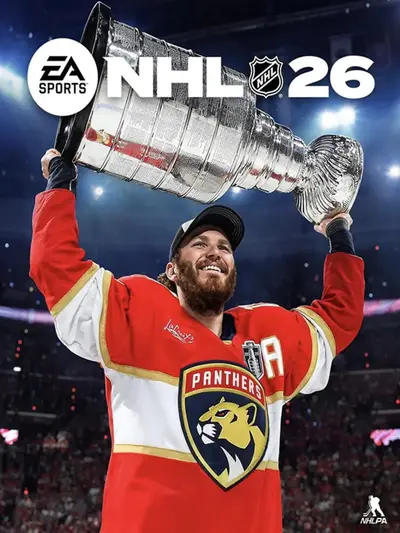
NHL 26
78Quick answer
Quick answer
NHL 26 is een duidelijke stap vooruit voor de serie, met strakkere schaats- en puckfysica, sterkere presentatie en een Be a Pro-modus die eindelijk weer iets te vertellen heeft. Tegelijk blijft het een game die niet altijd vriendelijk is voor nieuwe spelers en soms nog te veel leunt op bekende jaarlijkse frictiepunten. Voor fans van ijshockey is dit een van de betere delen van de laatste jaren.
We geven NHL 26 een 78 omdat de gameplay en presentatie duidelijk sterker zijn dan de resterende frictiepunten, maar niet zo sterk dat elke speler meteen overtuigd zal zijn.
A hockey game that finally feels more alive
NHL 26 is the kind of annual sports release that reminds you why small improvements matter when they are aimed at the feel of the sport itself. From the opening faceoff, it is clear that this year’s game is less interested in flashy reinvention and more focused on making hockey play, move, and collide in a more believable way. Skating is sharper, puck handling has more weight, and physical contact lands with a better sense of momentum than before. The result is a game that feels less mechanical and more like a real match unfolding shift by shift.
That emphasis on authenticity is what gives NHL 26 its identity. It does not try to be the most immediately accessible sports game on the market, and it certainly does not hand out easy thrills every few seconds. Instead, it asks you to understand spacing, timing, and the rhythm of the sport. For hockey fans, that makes a huge difference. For newcomers, it can be intimidating at first. But once the systems click, the game becomes much more rewarding than a simple highlight machine.
Gameplay: tighter skating, better flow
The biggest improvement in NHL 26 is how much more grounded the on-ice action feels. Skating is more responsive without becoming floaty, passes have a clearer sense of force, and the puck behaves in a way that makes each possession feel more deliberate. You notice the difference between a clean breakout and a messy board battle much more clearly now, and that clarity helps every shift feel more readable and more tense.
The pace is still fast, but it is a smarter kind of fast. You cannot just sprint into the offensive zone and expect the game to bail you out. You need to create lanes, read the defense, and build attacks with some patience. That may sound like a limitation, but it is really the game’s biggest strength. When a goal comes together after a smart entry, a well-timed pass, and a clean finish, it feels earned. NHL 26 does a better job than recent entries of making good hockey look and feel like good hockey.
Defensively, the game also benefits from more nuance. Body checks, poke checks, and interceptions are less random, which makes positioning and timing matter more than brute force. That is a welcome change because it rewards awareness instead of encouraging reckless play. If you are out of position, the game will usually make you pay for it. If you read the play well, you can shut down attacks in a way that feels satisfying and believable.
Still demanding, still not for everyone
Of course, that added realism comes with a cost: NHL 26 is not especially gentle with new players. The learning curve is still steep, and the game expects you to understand its systems fairly quickly. If you are coming in from a more casual sports title, or if you just want something you can pick up and enjoy without much thought, this may feel like hard work before it feels fun.
There are also moments where the game’s balance can feel a little too artificial. Occasionally, it seems as though the AI is nudging the action in ways that are meant to keep things close or compensate for momentum swings. Those moments are not constant, but they are noticeable enough to stop the game from feeling completely transparent. It is one of the few areas where the simulation illusion wobbles.
That said, players who enjoy mastering a sports game will likely appreciate the extra demands. NHL 26 wants you to learn its tempo, respect its defensive structure, and earn your chances. It is more satisfying for that, even if it is less forgiving.
Be a Pro finally has some weight
The clearest mode-level improvement this year is Be a Pro. For a long time, this mode has struggled to feel like a true career journey, but NHL 26 gives it more structure and more personality. There is a stronger sense of progression, a better feeling of identity, and more pressure attached to your performance. That makes the mode more engaging from the start and more compelling over time.
It is not perfect. Some narrative beats feel a little forced, and a few of the role-playing elements can come across as more scripted than organic. Still, the mode finally gives you a reason to care about your player beyond raw stats. You are not just grinding through games; you are trying to establish yourself, earn trust, and grow into a role. That is exactly what Be a Pro needed.
There are also some design choices that may divide players, especially around how player types and attributes are structured. Some fans will miss the broader freedom of older entries. But even with those caveats, this is the most meaningful Be a Pro has felt in years, and that alone makes it one of the game’s biggest wins.
Franchise, Ultimate Team, and the familiar annual loop
Outside of Be a Pro, NHL 26 sticks close to the series’ familiar mode lineup. Franchise-style play remains a strong option for players who enjoy roster management, tactical planning, and long-term team building. The improved gameplay helps here too, because a better on-ice experience makes every roster decision feel more worthwhile. When the game itself is more convincing, the management layer becomes easier to invest in.
Ultimate Team also benefits from the year’s gameplay changes, especially because attributes and player roles seem to matter more than they did before. That adds a bit more strategic texture to team building, which is welcome if you like thinking beyond raw ratings. At the same time, the mode still sits firmly inside the familiar annual sports-game ecosystem, so if you are already tired of that structure, NHL 26 is unlikely to change your mind.
What matters is that the core loop is stronger. Whether you are building a franchise, shaping a career, or chasing competitive rewards, the game gives you a better foundation to work from. It is not a dramatic overhaul, but it is a meaningful improvement in how the whole package plays.
Presentation: the broadcast illusion is strong
Presentation is one of NHL 26’s best qualities. The arenas look lively, the lighting is convincing, and the broadcast-style framing gives each game a real sense of occasion. Player animations are smoother and more expressive, which helps the action read better and makes the whole package feel more polished. It is exactly the kind of presentation work that matters in a sports game, because it sells the fantasy of being part of a live televised event.
The atmosphere is especially effective during big moments. Hard hits, fast transitions, and late-game pressure all come across well because the visual and audio design supports them. The ice looks active, the crowd feels present, and the overall production quality is high enough to make even routine games feel important.
There are still weak spots, though. Commentary can become repetitive, and some lines lose their impact after only a handful of games. That does not ruin the experience, but it does make the presentation feel a little less fresh over time. The game knows how to create atmosphere; it just does not always know how to sustain variety.
Who will get the most out of it?
NHL 26 is best suited to players who want hockey to feel like hockey. If you value realism, tactical play, and the satisfaction of building a proper attack, this is one of the strongest entries in the series in years. It is also a better fit for players who enjoy spending time with a game, learning its systems, and gradually getting more out of it as they improve.
Offline players may appreciate it most once they spend some time tuning sliders and adjusting the experience to their liking. The game can become very solid in that context, especially if you want to smooth out some of the rougher edges. Online players will likely be more divided, as they often are with annual sports games, but the underlying mechanics are strong enough to support competitive play.
If you are looking for immediate, casual fun, NHL 26 may feel a little too serious. If you want a hockey sim that respects the sport and rewards patience, it is much easier to recommend.
Conclusion
NHL 26 is not a revolution, but it is a confident and worthwhile step forward. The skating and puck physics are sharper, the defensive game has more nuance, and Be a Pro finally feels like a mode with real purpose again. Presentation is strong, the arena atmosphere is excellent, and the whole package feels more polished than recent entries.
It is not without flaws. The learning curve is still steep, commentary can grow repetitive, and the occasional artificial-feeling balance swing keeps it from reaching the very top tier. Even so, this is one of the better hockey games EA has produced in recent years. For longtime fans, it is an easy recommendation. For newcomers, it is a tougher sell, but one that may be worth the effort if they are willing to learn its rhythm. NHL 26 is the kind of sports game that improves the sport first, and that is exactly what it should be doing.
Verdict
NHL 26 is een overtuigende, verfijnde ijshockeygame die vooral fans van de sport veel te bieden heeft.
At a glance
Pros
- Strakkere schaats- en puckfysica
- Be a Pro voelt eindelijk weer betekenisvoller
- Sterke arena-sfeer en presentatie
- Meer nuance in positionering en verdedigend spel
Cons
- Nog steeds een stevige leercurve voor nieuwkomers
- Commentaar en herhaling kunnen snel repetitief worden
- Soms voelt de balans te kunstmatig aan
Screenshots
More reviews
Other recent game reviews on GAME-scanner.
There are no other reviews to show yet.