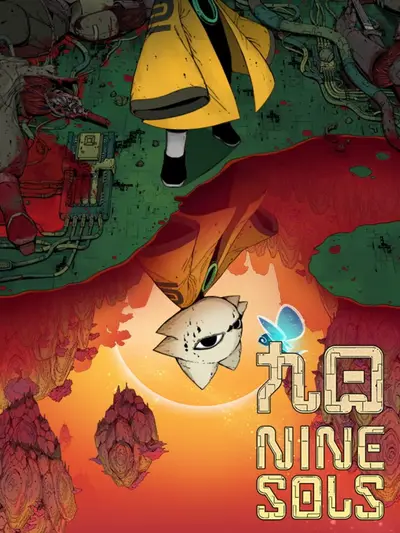
Nine Sols
87Quick answer
Quick answer
Nine Sols is een scherpe, sfeervolle metroidvania die vooral schittert in zijn parry-gedreven gevechten en uitgesproken taopunk-wereld. De game vraagt veel van je, maar beloont precisie, geduld en lef met een van de meest bevredigende actie-ervaringen van het jaar. Niet alles is even soepel in pacing en moeilijkheidsopbouw, maar de hoogtepunten zijn sterk genoeg om die hobbels te dragen.
Mijn score weerspiegelt een uitzonderlijk sterke kern in combat, sfeer en design, met alleen genoeg haperingen in tempo en moeilijkheid om net onder de absolute top te blijven.
Nine Sols is the kind of game that makes its intentions clear almost immediately: it wants precision, patience, and your full attention. This is not a metroidvania that lets you coast on exploration and passive progression. It is built around timing, reading opponents, and learning to trust your own reactions. For players who enjoy that kind of pressure, Nine Sols delivers an exceptional action experience. For everyone else, its intensity can feel relentless.
What makes the game stand out right away is how confidently it commits to its own identity. The hand-drawn 2D presentation, the taopunk aesthetic, and the way it blends Asian fantasy with science-fiction ideas give Nine Sols a look and mood that are hard to mistake for anything else. But the game is more than just striking art direction. Its visual style, combat design, and worldbuilding all work together, so that every fight and every new area feels like part of a coherent vision rather than a collection of genre conventions.
Combat built on rhythm and trust
The combat system is the clear highlight. Nine Sols leans heavily on deflects and parries, and it does so with enough confidence that every encounter feels like a test of rhythm, nerve, and observation. Enemy attacks are readable, animations communicate intent clearly, and the timing window for defense and retaliation is tight enough to make success feel earned. The game does not want you to overpower problems through raw stats or brute force. It wants you to understand the language of each battle.
That creates a combat loop that is both demanding and deeply satisfying. Once the system clicks, fights become a kind of dance: anticipate, deflect, counter, reposition, repeat. The best moments come when a boss that once seemed overwhelming starts to feel manageable because you have learned its patterns and can now control the pace of the encounter. That sense of growth is one of Nine Sols’ greatest strengths. It rewards discipline, and it makes improvement feel tangible.
The boss fights deserve special mention because they are where the game’s design philosophy shines brightest. These are not just obstacles between story beats; they are carefully staged highlights with distinct personalities, attack patterns, and phase changes that force you to adapt. Many of them are memorable not only because they are difficult, but because they are built with real mechanical clarity. Even when the challenge spikes, the game usually feels fair. It asks a lot, but it generally gives you the tools to succeed if you are willing to learn.
Exploration with purpose
As a metroidvania, Nine Sols favors purposeful progression over endless wandering. Its world opens up at a measured pace, and the game gives you good reasons to revisit earlier areas without turning backtracking into empty busywork. New abilities are rarely just keys for locked doors; they often matter in both traversal and combat, which helps the progression system feel unified rather than split into separate layers.
That cohesion is one of the reasons the game feels so well put together. Unlocking a new move or movement option usually changes more than one part of the experience. You might gain access to a new path, but you may also find that the same ability gives you more flexibility in a fight or helps you approach an enemy from a better angle. Progress in Nine Sols feels practical, and that makes every upgrade more satisfying.
Still, the structure is not always perfectly smooth. There are stretches where the pace slows down, especially when story setup or exposition interrupts the momentum of play. The world is interesting enough to support those pauses, but the game is at its strongest when it keeps the pressure on and lets the combat carry the experience. Not every area is equally exciting, and not every transition is as gripping as the battles themselves. The exploration works best as a complement to the action, not as a replacement for it.
A world with a strong visual identity
Visually, Nine Sols is immediately distinctive. Its hand-drawn art is rich in detail, the animation is fluid, and the environments are designed with enough care to make each region feel like part of a larger, lived-in world. The taopunk setting is especially effective because it does not feel like a simple aesthetic layer. The blend of spiritual imagery, mythic motifs, and futuristic elements gives the game a tone that feels both ancient and alien.
That identity extends to the smaller details as well. The UI is clean and stylish, the character designs are expressive, and the game consistently communicates atmosphere through color, motion, and composition. Even quieter sections carry a sense of purpose because the presentation is so cohesive. You can tell there is a strong artistic direction behind every screen, and that gives the whole experience a sense of confidence.
The soundtrack supports that vision beautifully. It adds weight to the action without overwhelming it, and it helps the game build tension in the moments that matter most. In boss fights especially, the audio design amplifies the sense of danger and momentum. The result is a presentation that is not just attractive, but functional in the best sense: it strengthens the gameplay rather than sitting beside it.
Difficulty, pacing, and the edge of frustration
The main caveat is that Nine Sols can be punishing, and not every difficulty spike lands with the same elegance. For some players, that is exactly the appeal. For others, it may feel like the game occasionally crosses from demanding into exhausting. The challenge is usually fair, but it is not always evenly tuned, and that can make certain sections feel harsher than they need to be.
Pacing is the other area where the game occasionally stumbles. Nine Sols knows how to build tension, but it does not always know when to step aside and let the action breathe. Some story and setup moments interrupt the flow more than they should, and a few areas are less engaging than the combat encounters they connect. Those issues do not break the experience, but they do keep it from feeling completely seamless.
Even so, the overall package is hard to dismiss. Nine Sols is a confident, stylish, and mechanically sharp game with a memorable setting and some excellent boss design. It is not trying to be easy, and it is not trying to please everyone. Instead, it commits to a specific kind of challenge and executes that vision with remarkable consistency.
Conclusion: demanding, distinctive, and worth the effort
Nine Sols is a standout action-platformer that earns its reputation through precision and personality. Its parry-focused combat is among the best parts of the experience, its bosses are memorable, and its taopunk world gives the game a visual and thematic identity that lingers long after you stop playing. The exploration is solid, the progression is well integrated, and the presentation is consistently impressive.
It is not without flaws. The difficulty can be punishing, the pacing occasionally slows, and not every area is as exciting as the fights that define the game. But the highs are high enough to make the rougher edges feel like part of a larger, ambitious whole. If you enjoy challenging action games with a strong sense of style, Nine Sols is absolutely worth your time.
Verdict
Een indrukwekkende, harde maar zeer belonende actie-metroidvania die zijn eigen identiteit volledig waarmaakt.
At a glance
Pros
- Uitstekend parry- en deflect-combat met veel ritme en precisie
- Sterke, memorabele baasgevechten die eerlijk en uitdagend aanvoelen
- Unieke taopunk-setting met prachtige handgetekende presentatie
- Progressie en vaardigheden sluiten goed aan op zowel verkennen als vechten
Cons
- De moeilijkheid kan voor sommige spelers te hard of te grillig aanvoelen
- Het tempo zakt soms door verhaal- en opbouwmomenten
- Niet elk gebied of tussenstuk is even spannend als de gevechten
Screenshots
More reviews
Other recent game reviews on GAME-scanner.
There are no other reviews to show yet.