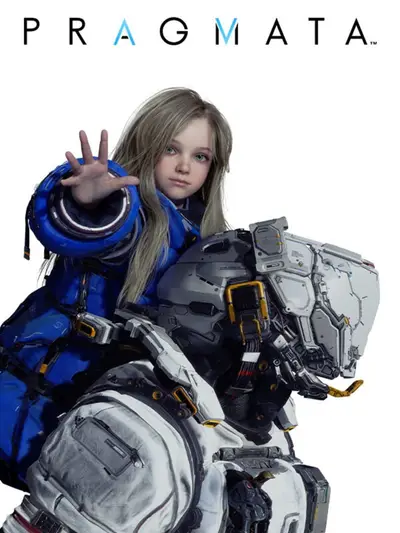
PRAGMATA
79Quick answer
Quick answer
PRAGMATA is een compacte sci-fi shooter die vooral overtuigt door zijn slimme mix van schieten en hacken. De actie voelt fris, strak en tactisch, terwijl de relatie tussen Hugh en Diana de reis door de maanbasis net genoeg karakter geeft. Niet alles is even diep of emotioneel uitgewerkt, maar de kern van de game werkt opvallend goed.
Onze score van 79 weerspiegelt een game die bijna volledig op zijn gameplay draagt: sterk, origineel en strak, maar net niet diep genoeg voor de absolute top.
A shooter that finds its own rhythm
PRAGMATA is the kind of game that looks familiar at first glance, only to reveal that it has no interest in fitting neatly into a single box. Yes, it is a third-person shooter. Yes, it is a linear science-fiction adventure. But those labels barely capture what makes it work. Its real identity comes from the way shooting, movement, positioning, and real-time hacking are woven together into a single rhythm. The result is an action game that feels tense, tactical, and unusually focused.
That focus is one of PRAGMATA’s biggest strengths. Instead of trying to be enormous, it chooses precision. There is no sprawling open world here, no endless layer of side systems competing for attention. The game is built around encounters that matter, spaces that must be read, and enemies that ask for more than raw reflexes. It wants you to think while you act, and it does so without ever losing clarity.
In a landscape crowded with oversized productions, that restraint feels refreshing. PRAGMATA has the confidence to keep its scope tight and its ideas clean. It does not need to overwhelm you to make an impression; it just needs to execute its core loop well. Fortunately, it does exactly that.
Hugh and Diana as the engine
The partnership between Hugh and his android companion Diana is more than a story premise. It is the backbone of the entire experience. Diana is not a passive helper or a decorative sidekick; she is central to both the gameplay and the emotional shape of the adventure. That gives the game a strong identity, because every fight and every progression beat is built around the idea that these two characters function best together.
Mechanically, that means PRAGMATA is always asking you to manage two layers at once. Hugh brings the firepower, while Diana handles the hacking that opens enemies up, weakens them, or creates windows for attack. That dual structure gives each encounter a tactical edge. You are not just aiming and shooting; you are constantly making decisions about timing, priorities, and positioning. The combat feels more deliberate than you might expect from a game with this kind of production value.
The relationship also gives the cold setting a human center. The lunar research station is sterile, functional, and often deliberately empty, which suits the premise well. But it is the chemistry between Hugh and Diana that keeps the game from feeling emotionally distant. Their bond is understated rather than melodramatic, and that restraint makes it more effective. The game does not need to shout to make you care.
Combat built on timing and insight
The combat is where PRAGMATA truly comes alive. Every encounter is structured around a clear, almost rhythmic flow: assess the situation, choose the right moment, trigger the appropriate hack, and exploit the opening that follows. It sounds straightforward, but in practice it creates a satisfying sense of pressure. Enemies are not just targets; they are problems to solve under stress.
What makes the action stand out is how readable it remains even when things get intense. The game is fast, but it is never messy for the sake of it. Visual cues, animation timing, and encounter design all work together to keep the action legible. That means success feels earned. When you clear a room efficiently, it is because you understood the systems and used them well, not because you happened to mash the right buttons quickly enough.
There is also enough variation in enemy behavior and arena layout to keep the combat from settling into routine. The game introduces new wrinkles at a steady pace, which helps the loop stay fresh without overcomplicating it. PRAGMATA is at its best when it asks you to think on your feet, and it does that often enough to keep the experience engaging from start to finish.
Compact, linear, and purposeful
One of the smartest things PRAGMATA does is embrace its compact size. It is not trying to stretch itself across dozens of hours or bury you in optional content. Instead, it uses its length to stay sharp and purposeful. That gives the game a strong sense of momentum. There is very little filler, and that is a virtue here.
Progression is handled with similar discipline. The game gives you enough room for personalization and variation to shape your approach, but not so much that the core loop gets diluted. New elements are introduced at a steady pace, usually right when the formula needs a small shake-up. That keeps the experience from going stale without turning it into a systems-heavy checklist.
The level design deserves special praise. The environments are not just attractive backdrops; they actively shape how you move through the game. The pacing shifts, encounter placement, and room layouts all work together to guide your attention. You are not simply walking from one arena to the next. The game is constantly managing your tempo, and it does so with a confidence that makes the linear structure feel deliberate rather than restrictive.
A cold world with a strong identity
PRAGMATA’s setting is a near-future lunar research station, and the game makes excellent use of that premise. The atmosphere is cool, clinical, and often quietly lonely, which gives the whole experience a distinct tone. The art direction is confident and controlled, leaning into clean sci-fi imagery rather than excessive spectacle. Everything feels considered, from the architecture to the lighting to the way the game frames its combat spaces.
That visual identity matters because it supports the gameplay instead of competing with it. PRAGMATA knows when to stage a memorable set piece and when to let a room feel sparse so the tension can breathe. The presentation is stylish, but it is never just style for its own sake. Form and function feel closely aligned, and that makes the game’s world more convincing.
There is also a certain charm in how restrained the setting is. This is not loud, maximalist science fiction. It is a colder, more measured take on the genre, where emptiness and technology create their own atmosphere. That gives PRAGMATA a personality that is easy to recognize and hard to forget.
Not everything goes as deep as it could
For all its strengths, PRAGMATA is not equally ambitious in every area. The story can feel a little shallow at times. The premise is intriguing, and the Hugh-Diana dynamic gives the game plenty of charm, but the narrative material does not always rise to the same level as the gameplay. At moments, it feels like the game is more interested in keeping you moving than in digging deeply into its world or characters.
That is not a fatal flaw, because the gameplay carries the experience with ease. Still, it is worth noting for players who want a more layered science-fiction story. PRAGMATA is primarily about interaction, tension, and rhythm. If you are looking for a sprawling narrative with lots of emotional detours, this will probably feel more restrained than rich.
The linear structure may also be a sticking point. The game’s compactness is one of its strengths, but it can also make the experience feel too contained for some players. There are few detours, limited side systems, and not much room to wander. If you enjoy tightly directed action games, that will likely be a plus. If you want breadth and freedom, you may find it a little too lean.
Conclusion
PRAGMATA is a smart, tightly built sci-fi action game that succeeds because it knows exactly what it wants to be. Its blend of shooting and real-time hacking creates combat that is both exciting and thoughtful, while the chemistry between Hugh and Diana gives the experience a memorable emotional core. The pacing is excellent, the level design is sharp, and the presentation has real confidence.
Its limitations are clear enough: the story does not always go as deep as the premise suggests, and the linear structure may feel compact to a fault for some players. But those caveats do little to diminish how well the game works on its own terms. PRAGMATA is a rare example of a modern action game that feels disciplined without feeling dry. It is focused, stylish, and consistently engaging — a lunar journey that leaves a strong impression precisely because it does not waste your time.
Verdict
Een compacte, slimme en bijzonder goed spelende sci-fi shooter die vooral uitblinkt in zijn kernidee.
At a glance
Pros
- Frisse mix van schieten en real-time hacken
- Sterke chemie tussen Hugh en Diana
- Strakke pacing en slimme levelopbouw
- Sterke art direction en sfeervolle sci-fi presentatie
Cons
- Het verhaal blijft soms wat oppervlakkig
- De lineaire opzet kan voor sommige spelers te compact aanvoelen
Screenshots
More reviews
Other recent game reviews on GAME-scanner.
There are no other reviews to show yet.