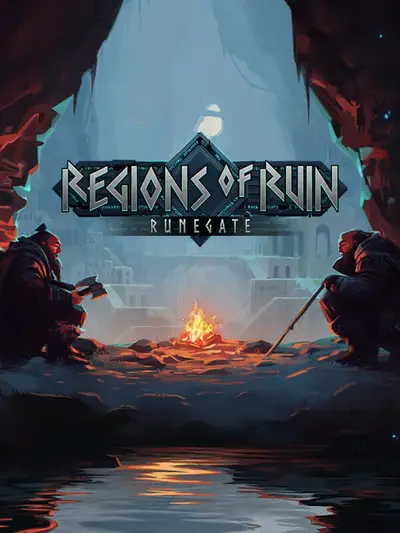
Regions of Ruin: Runegate
74Quick answer
Quick answer
Regions of Ruin: Runegate is een prettige mix van actie-RPG, verkenning en wederopbouw, met een dwarven fantasy-saus die meteen sfeer neerzet. De gevechten zijn toegankelijk, de progressie voelt belonend en het opbouwen van je nederzetting geeft elke sessie een duidelijk doel. Tegelijkertijd is de hoofdstructuur wat herhalend en leunt het spel soms te zwaar op grind.
Onze score weerspiegelt een game die veel goed doet, met duidelijke herhaling als belangrijkste rem op de eindbeoordeling.
A dwarven adventure with a clear rhythm
Regions of Ruin: Runegate knows exactly what it wants to be from the opening moments: an approachable 2D action RPG about exploring a broken world, clearing out ruins, and gradually rebuilding a future for a dwarven people. That combination of exploration, combat, gathering, and construction is not new, but it feels unusually purposeful here. The game does not drown you in systems or ask you to memorize a dozen overlapping mechanics. Instead, it gives you a clear loop and trusts that the loop itself is strong enough to carry the experience.
That clarity is one of Runegate’s biggest strengths. The pace is easy to settle into, the early hours are welcoming, and the game does a good job of making progress feel immediate without becoming overwhelming. You always know what you are working toward, whether that means pushing deeper into a ruin, bringing back resources, or improving your settlement. It is the kind of structure that works just as well in short sessions as it does in longer ones, because there is always one more task that feels worth finishing.
The fantasy setting helps a great deal. Abandoned dwarven halls, reclaimed outposts, and a world slowly taking shape again all give the game a distinct identity. This is not just an adventure about fighting monsters; it is about restoring something that has been lost. That sense of recovery gives the whole journey warmth and purpose.
Combat that is simple, but not shallow
The combat in Regions of Ruin: Runegate is intentionally straightforward, and that works in its favor. This is not a game built around flashy combo chains or complicated combat trees. Instead, it focuses on timing, positioning, and making smart use of the tools you have unlocked. The result is a hack-and-slash system that is easy to read but still satisfying to engage with.
Because the action is so readable, every encounter feels clean and manageable. You are constantly chasing small victories: clearing a group of enemies, securing a new area, finding better gear, or unlocking a skill that changes how you approach the next fight. That steady rhythm of reward is a big part of the game’s appeal. It keeps the momentum going and makes it easy to fall into the familiar “just one more fight” mindset.
Accessibility is another major plus. Even players who do not usually gravitate toward 2D action games can get into Runegate without much friction. The game explains itself well, the controls and systems are easy to grasp, and the combat never becomes so demanding that it turns into a chore. It is a good example of a game knowing its lane and staying comfortably inside it.
Progression that feels tangible
One of the most rewarding aspects of the game is how clearly you feel your character growing. Progression is not just a matter of watching numbers rise; it changes how you move through the world and how much resistance you meet along the way. Enemies that once felt troublesome become manageable. New abilities open routes and options. Earlier fights that used to slow you down become quick, efficient cleanups.
That sense of growth is especially effective because it is tied to the game’s larger fantasy of restoration. You are not only making your character stronger, you are helping rebuild a society. That gives every upgrade a little more weight. The game understands that progression is most satisfying when it is visible, and it uses that idea well. You can see the world becoming more stable as your own capabilities improve, and that connection makes the whole experience feel cohesive.
The RPG elements are accessible without feeling empty. There is enough room to shape your build and make meaningful choices, but not so much complexity that the game loses its pace. Runegate aims for clarity over depth, and while that may limit how far it can stretch, it also makes the progression loop consistently enjoyable.
Rebuilding a home from ruins
The settlement rebuilding system is more than a cosmetic flourish. It gives the game structure and turns resource gathering into something with a real purpose. In many games, collecting materials becomes a dull obligation that exists only to gate progress. Here, the work is tied to something tangible: a ruined outpost becomes a functioning base, and a broken place gains meaning again. That makes the grind easier to accept, because you can actually see what it is for.
This is where Runegate’s fantasy premise becomes especially effective. You are not just looting a map for the sake of completion; you are reclaiming a homeland. Each repaired structure and each improved facility feels like a small victory for the dwarven community you are trying to restore. That gives the game a stronger emotional core than many similar action RPGs manage, and it helps the experience feel more grounded even when the combat stays light and accessible.
The presentation supports that feeling nicely. The retro-inspired visual style is atmospheric, but it also stays clear enough to keep the action readable. Environments have a compact, practical look that suits the game’s scale, yet they still carry personality. The result is a world that feels handmade and lived-in rather than generic. It may not be technically flashy, but it is consistently appealing.
Atmosphere, tone, and ease of entry
The story is deliberately easy to follow, and that is a smart choice. Runegate does not try to overwhelm you with dense lore or elaborate political intrigue. It keeps the focus on the journey, the rebuilding, and the immediate goals in front of you. That makes it very easy to jump into, and it also means the game rarely gets in the way of itself. You are always moving toward something concrete.
That restraint gives the game a pleasant tone. Because it is not constantly trying to explain every detail, the world has room to breathe. The ruins, settlements, and reclaimed spaces tell their own story through visual context and progression. You get the sense of a world slowly recovering, and that is enough. The game does not need to overstate its premise to make it work.
For players who value clarity and momentum, that approach is ideal. Runegate is not interested in making you fight the interface or the narrative. It wants you to explore, build, and improve, and it keeps the path toward those goals as direct as possible.
Where repetition starts to show
Of course, Regions of Ruin: Runegate is not without flaws. The biggest one is repetition. Over time, the core structure can become predictable, especially when certain quests and gathering loops begin to repeat themselves. That is not necessarily a deal-breaker in a game built around routine and restoration, but here the variety sometimes arrives a little too slowly for its own good.
As a result, the tension can dip during longer stretches. The game remains enjoyable, but it does not always keep surprising you. Some of the momentum comes from the satisfaction of progress rather than from fresh ideas, and that can make the experience feel more dependable than exciting. The foundation is strong enough that this never becomes fatal, but it does keep the game from reaching the very top tier.
The resource grind contributes to that problem as well. Because so much of the game’s advancement depends on collecting and rebuilding, there are moments when the pace slows down more than it should. The loop remains satisfying in principle, but some stretches feel more mechanical than engaging. When that happens, the game leans a little too hard on repetition to fill its runtime.
Conclusion
Regions of Ruin: Runegate is a strong and often very enjoyable action RPG built around a compelling fantasy of restoration. Its accessible combat, tangible progression, and satisfying rebuilding loop give it a lot of momentum, and its atmosphere does a great job of making the world feel worth saving. It is not especially ambitious in structure, and it can become repetitive, but it understands the appeal of its own systems and uses them well.
That makes it easy to recommend to players who enjoy straightforward action, visible growth, and the satisfaction of rebuilding a world with their own hands. It may not reinvent the genre, but it delivers a warm, coherent, and rewarding adventure that knows exactly what it wants to offer.
Verdict
Een sterke dwarven actie-RPG met echte charme, al houdt herhaling het net onder de top.
At a glance
Pros
- Toegankelijke, vlot leesbare hack-and-slash actie
- Sterke progressie die echt voelbaar wordt
- Wederopbouw van de dwergenbasis geeft doel en sfeer
- Sfeervolle retroachtige presentatie
Cons
- De hoofdstructuur wordt op termijn wat repetitief
- Resource grind kan de vaart uit de ervaring halen
Screenshots
More reviews
Other recent game reviews on GAME-scanner.
There are no other reviews to show yet.