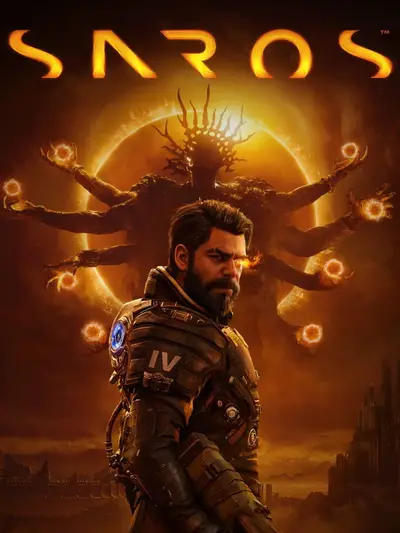
SAROS
86Quick answer
Quick answer
SAROS is een meedogenloze sci-fi shooter die zijn gevechten met overtuiging neerzet: snel, agressief en vol risico-beloning. De sfeer van Carcosa en de Eclipse is sterk genoeg om de soms harde roguelite-structuur te dragen, ook al blijven niet alle systemen even elegant of verrassend. Het resultaat is een indrukwekkende, uitdagende actiegame die net iets minder strak is dan zijn beste momenten doen vermoeden.
Onze score weerspiegelt een zeer sterke actiegame met uitstekende combat en sfeer, maar ook enkele duidelijke ruwe randen.
A hostile world with a real identity
SAROS wastes little time establishing mood. Carcosa feels dangerous, unstable, and strangely alive from the outset, while the Eclipse is more than a lore hook: it is a corrupting force that seeps into everything the game does. That gives SAROS a strong identity right away. This is not just a shooter set in space; it is a game about pushing through a world that seems determined to break both body and mind.
That atmosphere matters because it gives the action weight. The sci-fi horror framing is not window dressing. It shapes the pacing, the tension, and even the way you read each encounter. SAROS understands that a memorable setting can do more than look good: it can make every fight feel like part of a larger, unsettling struggle.
What stands out most is how consistent that identity feels. From the first moments, the game commits to unease, corruption, and pressure, and it rarely lets go. Even when the story steps back, the world keeps speaking through its environments, enemy designs, and the sense that something is always slightly wrong. That cohesion goes a long way in making SAROS memorable.
Combat built on pressure and momentum
The combat is where SAROS earns its place. This is fast, aggressive action with a bullet-hell edge, and it asks a lot from the player. Enemies press hard, the screen fills quickly, and survival depends on movement, awareness, and a willingness to take calculated risks. The game is demanding, but it rarely feels cheap. When you get hit, you usually know why; when you survive a messy encounter, it feels earned.
What makes the combat satisfying is the way it rewards experimentation. Different weapons matter, and the game encourages you to test them rather than settle into one safe routine. That creates a strong risk-reward rhythm: push too hard and you can get punished, play too conservatively and you lose the game’s momentum. SAROS is at its best when it pushes you into that uncomfortable middle ground where instinct and planning have to work together.
There is also a pleasing sense of physicality to the action. Movement is not just about dodging; it is about claiming space, keeping pressure on enemies, and staying one step ahead of the chaos. That makes every encounter feel active rather than reactive. You are not waiting for openings so much as creating them through timing and nerve.
Roguelite structure with purpose
As a roguelite, SAROS leans into repetition, but it does so with enough variation and progression to keep the loop engaging. There is a real sense of forward motion, not just in raw power but in understanding how the game wants to be played. You are not merely grinding for numbers; you are learning the language of its systems. That makes each return to Carcosa feel a little more informed and a little more dangerous.
The game also benefits from its lore delivery. Audio logs and traces of previous crews add texture to the world, turning exploration into more than a path between fights. They help build curiosity, which is essential in a structure that could otherwise become mechanical. SAROS keeps you moving partly because you want to see what the next area reveals, and partly because you want to understand what happened here before you arrived.
Progression is especially effective because it supports experimentation rather than replacing it. The game does not simply hand out power for the sake of it; it gives you reasons to rethink your approach. That keeps the loop from feeling static. Even after several runs, there is still a sense that a different weapon choice or a different route could change the shape of an entire attempt.
Where the edges show
SAROS is not flawless, and its rougher edges are noticeable. The supporting cast is not especially vivid, and some of the non-combat framing feels flatter than the combat deserves. There is also a certain rigidity to the overall structure that may wear on players who want more variety in tone or pacing. The game is intense by design, but that intensity can occasionally crowd out nuance.
That said, these issues do not undermine the core experience. They mostly keep SAROS from reaching the absolute top tier of the genre. The action is strong enough, and the atmosphere distinctive enough, that the weaker elements remain secondary. Still, they matter, especially in a game that asks for repeated runs and sustained attention.
The pacing issue is the most noticeable of the bunch. SAROS is so committed to pressure that it sometimes has trouble creating contrast. A few more breathing spaces, or a little more variation in how it stages its quieter moments, could have made the highs hit even harder. As it stands, the game is excellent at sustaining tension, but less interested in modulating it.
Presentation that supports the experience
Visually, SAROS does a lot of heavy lifting for its tone. The environments are bleak without becoming monotonous, and the game uses contrast well to keep its alien world readable even in the middle of chaos. Enemy silhouettes, lighting, and environmental detail all work together to make Carcosa feel like a place with history and hostility baked into its surfaces.
The audio design is equally important. Weapons have impact, enemy attacks are easy to feel even when the screen is crowded, and the overall soundscape reinforces the sense that the Eclipse is always nearby. That matters in a game like this, where clarity and atmosphere have to coexist. SAROS manages that balance well enough that the presentation never feels like decoration; it feels like part of the combat language.
Verdict
SAROS is a sharp, stylish sci-fi shooter with excellent combat and a world that lingers in your head. Its roguelite structure is engaging, its atmosphere is memorable, and its best moments are genuinely thrilling. A few flatter story beats and some uneven supporting systems keep it from greatness, but not by much. This is a very strong action game for players who want challenge, tension, and a setting with teeth.
It is the kind of game that stays interesting because it is so committed to its own identity. SAROS knows what it wants to be: demanding, oppressive, and rewarding in equal measure. If that sounds appealing, it delivers with confidence.
Verdict
SAROS is een indrukwekkende, uitdagende shooter die net niet perfect is, maar wel heel dicht in de buurt komt.
At a glance
Pros
- Sterke, agressieve combat met duidelijke risk-reward-spanning
- Sfeervolle sci-fi horrorwereld met een eigen identiteit
- Goede progressie- en lootstructuur die experimenteren stimuleert
Cons
- De ondersteunende cast en sommige hubmomenten blijven wat vlak
- De hoge intensiteit zorgt soms voor minder afwisseling in tempo
Screenshots
More reviews
Other recent game reviews on GAME-scanner.
There are no other reviews to show yet.