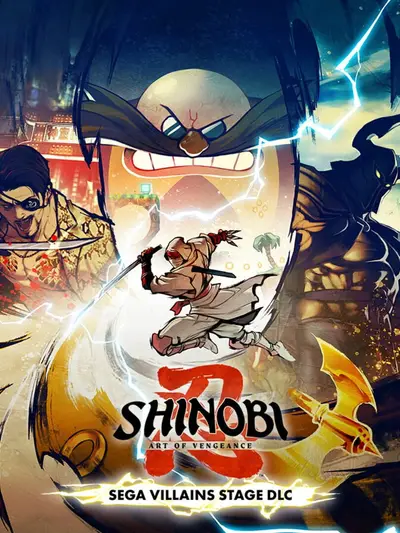
Shinobi: Art of Vengeance - SEGA Villains Stage DLC
72Quick answer
Quick answer
SEGA Villains Stage DLC is vooral een uitbreiding voor spelers die al genoten van Shinobi: Art of Vengeance. De baasgevechten zijn sterk, de crossover-keuze is leuk en de nieuwe ninpos geven je net genoeg extra gereedschap om terug te keren. Tegelijk voelen de tussenliggende stages te lineair en te mager aan om dit echt onmisbaar te maken.
Mijn score weerspiegelt een goede DLC met duidelijke hoogtepunten, maar ook te veel veilige en lineaire tussenstukken om echt uit te blinken.
Shinobi: Art of Vengeance - SEGA Villains Stage DLC is the kind of expansion that makes its intentions clear from the first minute. This is not a sprawling new campaign or a dramatic reinvention of the base game. Instead, it is a compact, combat-first add-on that wants to give fans more of what Shinobi already does well: fast movement, sharp timing, and boss encounters that demand attention. By folding in a handful of iconic SEGA villains, the DLC also gives itself a strong identity. It is small in scope, but it knows exactly where it wants to land.
A crossover that treats its villains as the main event
The biggest draw here is the villain roster. Majima, Dr. Eggman, and Death Adder are not just recognizable names dropped in for novelty. They give the DLC a proper crossover flavor and make it feel like a deliberate celebration of SEGA’s wider history. That matters, because a good crossover should do more than trigger recognition; it should create a new context for the gameplay. Here, the contrast between Musashi and these villains gives the expansion a clear sense of purpose.
The boss fights are where that purpose pays off best. These encounters are the highlight of the package, and they are built to test your understanding of Musashi’s toolkit rather than simply decorate the campaign with fan service. You have to read patterns, manage space, and stay aggressive without getting reckless. When the arenas tighten and the game strips away distractions, the DLC feels like a clean extension of Shinobi’s strongest ideas. It is in those moments that the expansion stops feeling like extra content and starts feeling like a focused challenge mode with production value.
The three new ninpos also help keep the combat from feeling like a pure repeat of the base game. They do not radically alter the loop, but they add useful tactical variety and encourage you to approach encounters with a slightly different mindset. That is important in a DLC like this, because value comes not just from the amount of content, but from whether that content gives you a fresh reason to engage with familiar systems.
Five new stages, but not five new ideas
The five new stages make up most of the DLC, and this is where the package becomes more uneven. They are competent, readable, and well paced, but they rarely surprise. Progression is fairly linear, platforming is used sparingly, and the crossover worlds are not explored as boldly as they could have been. As a result, the stages often feel like connective tissue between the real highlights rather than standout set pieces in their own right.
That is not a fatal flaw, because the combat remains enjoyable and the flow is brisk. But it does mean the expansion leans heavily on repeated combat gauntlets, and those can start to blur together before the end. The DLC seems content to stay within a safe lane: keep the action moving, keep the challenge steady, and avoid overcomplicating the formula. For players who mainly want more Shinobi combat, that approach works. For anyone hoping the crossover premise would lead to more inventive level design, it may feel a little conservative.
Thematically, there was room for more. A DLC built around SEGA villains could have leaned harder into visual gags, environmental twists, or stage mechanics that reflected each antagonist’s personality. Instead, the expansion mostly uses the worlds as backdrops for combat. That keeps the pacing tidy, but it also means the levels do not leave quite as strong an impression as the boss fights do. The result is a package that is enjoyable in the moment, but not especially memorable once you step away from it.
Rewards and replayability feel a little thin
Another weakness is the reward structure. The incentives for clearing each stage are not especially exciting, which makes the DLC feel less generous than it should. That is unfortunate, because the content itself is polished enough that you want the game to reward you more clearly for engaging with it. Instead, the extras feel modest, and that reduces the urge to replay the stages once you have seen the main attractions.
The Boss Rush mode is the best counterweight to that problem. It is a smart inclusion because it concentrates the DLC’s strongest material into a format that naturally encourages mastery. If you want to refine your timing, learn the fights more deeply, or simply enjoy the best part of the expansion without the connective tissue, Boss Rush is the mode that gives the DLC its clearest replay value. Even so, the overall package still feels more appealing to players who are already invested in Shinobi and in the SEGA villains on display than to anyone looking for a substantial standalone expansion.
How it compares to the base game
The key question for any DLC is whether it adds something meaningful to the original experience. Here, the answer is yes, but with caveats. The boss fights absolutely strengthen the package, and the new ninpos give returning players a reason to revisit Musashi’s combat options. At the same time, the stages themselves do not match the best parts of the base game in terms of variety or imagination. If the main game gave you a fuller sense of rhythm between movement, exploration, and combat, this DLC narrows the focus considerably.
That narrower focus is not inherently bad. In fact, for players who already loved the base game’s combat, it may be exactly what they want: a tighter, more concentrated challenge with a crossover hook. But it also means the expansion feels less essential than it could have. It is good at being itself, yet it does not quite expand the Shinobi formula in a way that feels transformative. It is a side chapter, not a new cornerstone.
Conclusion
Shinobi: Art of Vengeance - SEGA Villains Stage DLC is a fun, polished add-on that shines brightest in its boss encounters. The villain selection is excellent, the new ninpos add welcome combat variety, and the Boss Rush mode is a smart way to package the DLC’s best material. The problem is that the stages around those fights are too linear and too predictable to make the whole expansion feel essential, and the rewards do not do enough to encourage repeated runs.
As a result, this is an easy recommendation for fans of the base game and for anyone excited by the SEGA crossover premise. For those players, it is a satisfying extra chapter with some genuinely memorable fights. For everyone else, it is a solid but non-essential expansion: enjoyable, well made, and often exciting, but not quite substantial enough to demand immediate attention.
Verdict
Een sterke, maar niet onmisbare uitbreiding die vooral leeft van zijn baasgevechten.
At a glance
Pros
- Sterke en memorabele baasgevechten
- Leuke crossoverkeuze met herkenbare SEGA-schurken
- Nieuwe ninpos geven extra variatie in combat
Cons
- De tussenliggende stages zijn vrij lineair en voorspelbaar
- Beloningen en herhaalprikkel voelen wat mager
Screenshots
More reviews
Other recent game reviews on GAME-scanner.
There are no other reviews to show yet.