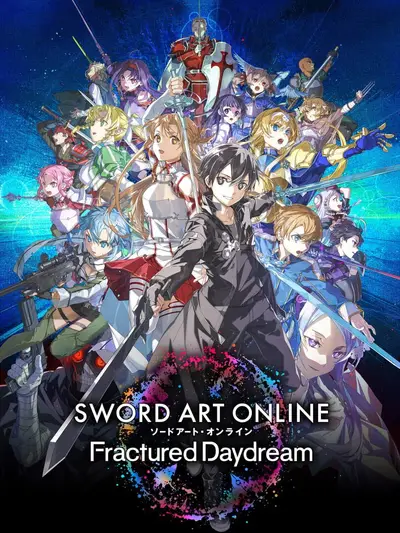
Sword Art Online: Fractured Daydream
64Quick answer
Quick answer
Sword Art Online: Fractured Daydream is vooral een fanservice-gedreven co-op actiegame die het beste werkt wanneer je met een vaste groep een raid in duikt. De combinatie van herkenbare personages, een alternatieve verhaallijn en grote gevechten geeft het spel genoeg identiteit, maar de herhaling en stroefheid blijven hardnekkig. Voor fans van de serie is dit een prima tussendoortje; wie op zoek is naar een strak uitgewerkte actie-RPG krijgt te vaak te maken met middelmatigheid.
Een degelijke maar oneffen co-op actiegame die vooral scoort op herkenning, teamwork en franchisecharme.
A crossover built for fans first
Sword Art Online: Fractured Daydream does not try to be a broad, all-purpose action RPG. Instead, it leans hard into its identity as a franchise crossover, placing familiar characters into a distorted version of the SAO world and sending them into large co-op battles. That focus gives the game a clear purpose: it wants to be a celebration of the series, with enough multiplayer spectacle to keep fans engaged.
For the right audience, that premise goes a long way. The alternate-story setup creates a fun excuse to bring together characters from different corners of the franchise, and the game clearly understands the appeal of seeing them interact in a new context. The story is not especially deep or surprising, but it has enough momentum and personality to make the campaign worth following. If you already care about the cast, the writing and scenario will likely land much better than they do for newcomers.
That said, the game’s appeal is tightly tied to your relationship with SAO itself. If you are here for a polished standalone action experience, the premise alone will not be enough to carry it. Fractured Daydream is more interested in making you smile when a favorite character appears or when an unexpected team-up happens than in building a world that feels truly original. It succeeds at that goal more often than not, but it also makes the game feel niche by design.
Combat, roles, and raid-scale chaos
The most enjoyable part of Fractured Daydream is its combat loop. This is a game built around team play, with raids and larger encounters that reward coordination, awareness, and a decent grasp of your chosen character. When everything clicks, the battles have a pleasing sense of scale. You are not just mashing through enemies; you are contributing to a group effort, watching for openings, and trying to make your role matter.
Character variety helps a lot here. The roster is large enough to encourage experimentation, and different heroes do feel distinct in how they approach combat. Some are better suited to close-range aggression, others to support or more tactical play, and that gives the game some welcome texture. Learning a character and improving your execution can be satisfying, especially if you enjoy action games that mix light RPG progression with multiplayer structure.
The best moments come when a raid starts to feel like a coordinated push rather than a loose collection of players doing their own thing. In those situations, the game’s design makes sense: enemies are large enough to feel threatening, boss patterns demand attention, and your chosen role gives you a reason to think beyond raw damage output. That sense of shared momentum is what keeps the combat from becoming a simple grind of button presses.
Still, the combat is not as smooth as it wants to be. There is a stiffness to movement and animation that can make the action feel less responsive than it should. In busy fights, the camera and general readability can also become an issue. None of this breaks the game outright, but it does keep the action from reaching the level of polish that the best games in the genre manage. You can feel the ambition, but you can also feel the friction.
Progression and repetition
Progression is competent, but it is also where the game’s limitations become most obvious. Missions often rely on familiar objectives and a fairly predictable structure: move through an area, defeat enemies, collect what you need, then repeat. That can work in a co-op action game, but Fractured Daydream rarely finds a way to make those tasks feel especially fresh.
The grind is another major factor. There is enough to unlock and upgrade to keep dedicated players busy, but the reward structure is not always generous enough to justify the repetition. If you enjoy slowly optimizing a character and revisiting content with friends, the loop can be satisfying. If you want a game that constantly surprises you, the pacing may wear thin before long.
There are multiple modes and a fair amount of content, which helps the package feel substantial. But volume is not the same as variety. The game often gives you more of the same rather than new ideas, and that makes it easy to understand why some players will bounce off after the novelty fades. The structure is serviceable, yet it rarely evolves in ways that keep each session feeling meaningfully different from the last.
That repetition also affects the campaign’s momentum. Even when the story is doing something interesting with its crossover premise, the mission design can undercut that energy by sending you through similar objectives again and again. The result is a game that is easy to appreciate in bursts, but harder to recommend for long, uninterrupted sessions unless you are already invested in the franchise hook.
Presentation and overall polish
Visually, the game does a respectable job of translating the anime style into a playable action format. The characters are recognizable, the effects are flashy enough, and the overall presentation supports the crossover fantasy well. When the game is at its best, it feels like a lively event built around beloved faces and big boss encounters.
The downside is that the environments and general polish do not always keep up. Some areas feel sparse, and the game’s rougher edges become more noticeable the longer you play. It is a serviceable production rather than a standout one, which is a shame because the concept has enough appeal to support something more refined.
Audio and presentation do enough to sell the spectacle, but they do not fully erase the sense that the game is working within a fairly modest technical envelope. That is not a deal-breaker, especially for fans who mainly want to spend time with the cast, but it does mean the game rarely feels premium in the way its premise suggests it could.
Verdict
Sword Art Online: Fractured Daydream is a decent co-op action game with a strong franchise hook, enjoyable character variety, and raid battles that can be fun in the right company. But repetition, stiffness, and uneven mission design stop it from becoming more than a solid niche recommendation. Fans of the series will get the most out of it; everyone else may find better-executed alternatives.
That makes it a fairly easy game to categorize, even if the category is a narrow one. If you want a lively SAO crossover with enough multiplayer energy to carry an evening, it delivers that. If you want a mechanically polished action game with a steady sense of progression and variety, it falls short. Fractured Daydream is enjoyable in the moments where its ideas align, but it never quite escapes the feeling that its best qualities are tied to a very specific audience.
Verdict
Leuk voor fans en co-opgroepen, maar te repetitief en te stroef om echt breed uit te blinken.
At a glance
Pros
- Sterke fanservice met veel herkenbare personages
- Co-op raids geven de gevechten schaal en energie
- Verschillende speelstijlen maken experimenteren leuk
Cons
- Missies worden snel repetitief en voorspelbaar
- Combat en camera voelen soms stroef en onhandig
- De grind weegt zwaar op het tempo
Screenshots
More reviews
Other recent game reviews on GAME-scanner.
There are no other reviews to show yet.