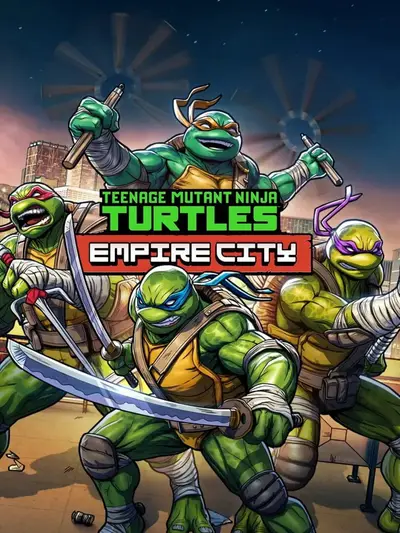
Teenage Mutant Ninja Turtles: Empire City
74Quick answer
Quick answer
Teenage Mutant Ninja Turtles: Empire City is een verrassend levendige VR-beat-’em-up die de Turtles-fantasie goed weet te vangen. De gevechten zijn snel en flexibel, de comic-book sfeer zit raak, en in co-op komt de charme pas echt los. Tegelijkertijd houdt herhaling het avontuur tegen en voelt de wereld soms dunner aan dan het idee verdient.
Ik geef Teenage Mutant Ninja Turtles: Empire City een 74 omdat de gevechten, stijl en co-op duidelijk boven gemiddeld zijn, maar herhaling en een dunne wereld de game net onder de echte uitblinkers houden.
A Turtles fantasy that finally clicks in VR
Teenage Mutant Ninja Turtles: Empire City has something many licensed games never quite manage: it understands the fantasy at its core. This is not just a game with familiar names and costumes attached. It is a first-person VR adventure that wants you to feel like a Turtle moving through a city under Foot Clan control, leaping across rooftops, smashing thugs into the pavement, and constantly thinking about timing, spacing, and momentum. In VR, that premise lands better than expected. The first-person perspective makes every hit feel more immediate, every dodge more urgent, and every movement a little more physical.
That matters because the Turtles have always worked best as a mix of action and attitude. Empire City leans into that balance. It is not trying to be a grim, hyper-realistic take on New York. Instead, it embraces energy, color, and comic-book exaggeration, which is exactly the right call. The result is a game that feels instantly recognizable even when its environments are not always as rich as they could be. The premise is strong, the tone is right, and the game knows what kind of fun it wants to deliver.
Combat that feels good right away
The biggest reason Empire City works is the combat. It is fast, accessible, and pleasantly physical without becoming overly complicated. You learn the basics quickly: attack, dodge, parry, reposition, repeat. That simplicity is a strength, especially in VR, where too much friction can kill momentum. Empire City keeps the barrier to entry low and gets you into the action fast, which makes it easy to enjoy whether you are a longtime Turtles fan or just looking for a breezy action game.
The combat also has a nice sense of impact. Hits land with enough force to feel satisfying, but the game never becomes so heavy that it loses its arcade-like energy. You are not being asked to master a combat simulator. You are being asked to play like a Turtle: quick, agile, and just a little bit reckless. That gives the action a playful rhythm that suits the license well. When several enemies crowd you at once, the game becomes especially fun, because you have to think about space and movement in a way that VR makes naturally engaging.
At its best, Empire City feels like a comic-book fight scene you are actively participating in rather than watching from the outside. That is a big win for a first-person VR brawler, and it gives the game a strong identity from the start.
Co-op brings out the brotherhood
If the combat is the backbone, co-op is the heart. Playing with friends adds a layer of chaos and charm that suits the Turtles better than almost any other format could. The franchise has always been about teamwork, banter, and the feeling that four very different personalities are somehow making it work. Empire City captures that spirit well when you are sharing the action with other players. Suddenly the game is not just about clearing enemies; it is about helping each other, covering mistakes, and laughing through the mess.
That social energy does a lot to elevate the experience. A fight that might feel routine in solo play becomes much more entertaining when your friends are involved. Someone overcommits, someone else saves the day, and the whole thing turns into the kind of noisy, good-natured chaos the Turtles are built for. The brotherhood angle is not just a story detail here; it becomes part of the moment-to-moment play.
Even when the mission design is not especially inventive, co-op keeps the game lively. It adds personality, unpredictability, and a sense of shared momentum that helps smooth over some of the rougher edges.
Light progression keeps the campaign moving
Empire City also benefits from a light RPG layer that gives the campaign a sense of growth. You unlock new abilities, pick up upgrades, and gradually become more capable as the story unfolds. The system is not deep, but it does not need to be. Its job is to keep the campaign moving and make each session feel like it has a little forward momentum. On that front, it succeeds.
This restraint is smart. Empire City is clearly built around flow rather than complexity, and a heavier progression system would probably work against that. Instead, the game gives you just enough to feel rewarded without drowning you in menus or stat management. That keeps the focus on the action, where it belongs. When the upgrades arrive at a steady pace, they help the game maintain a pleasant sense of progression even when the mission structure itself starts to repeat.
Still, the progression is more functional than exciting. It supports the experience well, but it rarely surprises you. That is fine for a game aiming for accessibility, though it does mean the campaign never quite evolves into something more ambitious.
Comic-book style with real personality
Visually, Empire City makes a strong impression. The comic-book presentation gives the game a distinct identity and suits the Turtles far better than a realistic approach ever would. Bold colors, expressive effects, and clean character silhouettes help the world feel stylized and energetic. Rather than trying to imitate a real city, the game presents a battleground that feels like it was pulled from a comic page and placed inside VR.
The dialogue supports that tone well. It is often funny without trying too hard, which is important for a property that has always balanced action with a wink. The game understands that the Turtles should be entertaining, not self-important. That keeps the mood light even when the Foot Clan threat is front and center. The result is a presentation that feels faithful without being overly nostalgic or stuck in the past.
The city itself, however, is less convincing than the style around it. There is atmosphere, but not always enough density. Some areas feel more like functional combat spaces than parts of a living urban environment, and that weakens the impact of the setting. The premise is strong — a city in the vacuum left by Shredder’s demise, with the Foot Clan tightening its grip — but the game does not always dig as deeply into that idea as it could. It moves efficiently from one encounter to the next, yet that efficiency sometimes comes at the expense of world texture.
Where repetition starts to show
Empire City’s biggest weakness is that its strengths are easy to enjoy, but its limitations become more obvious the longer you play. The mission structure can become repetitive, and the game leans on its core loop a little too often without enough variation to keep every stretch fresh. In a VR game, that matters more than it might elsewhere, because you are so directly involved in every encounter. When the rhythm starts to repeat, you feel it immediately.
The city can also feel thin and underpopulated. That does not ruin the game, but it does make the world feel less alive than the premise deserves. A Foot Clan-controlled city should feel tense, dangerous, and crowded with signs of conflict. Empire City gets part of that across, but not consistently enough. Some areas feel like staging grounds rather than neighborhoods under pressure, which limits the sense of place.
There are also occasional technical or design hiccups that interrupt the flow. They are not usually catastrophic, but in VR even small issues can stand out. A brief glitch or a clumsy interaction is enough to remind you that the game is not as polished as its best moments suggest. Fortunately, the core loop is strong enough to carry the experience through most of those rough patches.
Verdict
Teenage Mutant Ninja Turtles: Empire City is a fun, energetic VR brawler that gets the Turtles fantasy right more often than not. Its combat is fast and flexible, its comic-book presentation has real charm, and co-op adds a social spark that fits the license beautifully. The light progression system gives the campaign just enough structure to keep it moving, and the overall tone is breezy in a way that makes it easy to like.
But the game is not without problems. Repetition sets in, the city can feel underpopulated, and some design choices keep it from reaching the level its premise promises. That means Empire City lands as a good game rather than a great one. If you want an accessible, cheerful, and genuinely enjoyable Turtles adventure in VR, this is an easy recommendation. If you are hoping for deeper systems or a more convincing open world, you may come away wanting more.
Even so, there is enough here to make the game worth paying attention to. It captures the spirit of the Turtles, it makes VR combat feel natural, and it delivers enough fun to justify the ride. For fans, that is already a pretty solid victory.
Verdict
Niet de diepste Turtles-game, wel een van de leukere manieren om ze in VR te beleven.
At a glance
Pros
- Snelle, toegankelijke gevechten met goede VR-energie
- Sterke comic-book presentatie en passende Turtles-sfeer
- Co-op voegt veel charme en plezier toe
- Lichte progressie houdt de campagne in beweging
Cons
- De missies en encounters worden op termijn repetitief
- De stad voelt soms dun en weinig levendig aan
Screenshots
More reviews
Other recent game reviews on GAME-scanner.
There are no other reviews to show yet.