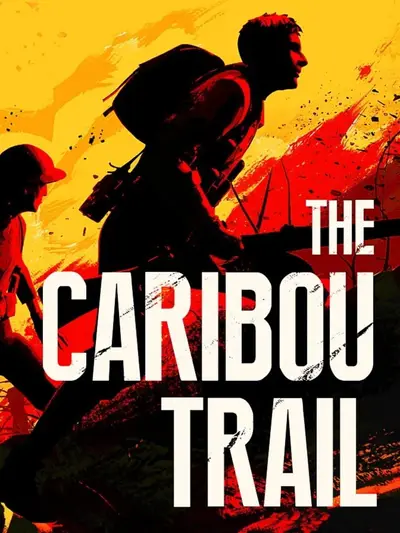
The Caribou Trail
67Quick answer
Quick answer
The Caribou Trail is vooral sterk als historisch drama: het vertelt een vergeten oorlogsgeschiedenis met oprechte menselijkheid, sterke audio en een duidelijke focus op overleven in plaats van heldendom. Als game is het echter minder overtuigend, met beperkte interactie en een tempo dat niet altijd meewerkt. Toch blijft het een korte, memorabele ervaring voor wie openstaat voor een meer contemplatieve benadering van oorlog.
De score weerspiegelt een sterke, emotionele ervaring met duidelijke gameplaybeperkingen: overtuigend en memorabel, maar niet volledig uitgewerkt.
The Caribou Trail is not a war game built to make you feel powerful. It is built to make you feel small, tired, and constantly aware of how fragile survival can be. Set against the backdrop of the First World War, it focuses less on battlefield glory than on the daily grind of staying alive: digging, carrying, listening, waiting, and trying to keep your nerve when the dark closes in. That choice gives the game a distinct identity right away. This is a story about endurance, not triumph.
What makes that approach work is the game’s commitment to the human side of the conflict. Rather than presenting history as a parade of dates and outcomes, The Caribou Trail narrows its focus to a few soldiers whose fears, jokes, and small acts of solidarity make the experience feel personal. It is a lesser-known chapter of war history, and the game treats it with enough care that it feels meaningful rather than merely educational. You come away with a stronger sense of the people involved, not just the events they were caught in.
A lesser-known war story told with real empathy
The Caribou Trail’s biggest strength is its storytelling. The game is clearly interested in the Royal Newfoundland Regiment and the hardship faced by young men who found themselves in a brutal conflict far from home. That historical angle gives the game a fresh perspective, especially for players who may not know much about this part of the war. It does not rely on broad war-movie shorthand or familiar heroics. Instead, it asks you to sit with the uncertainty, fear, and exhaustion that defined the experience.
The three central characters are written with enough warmth and specificity to feel real. They are not grand symbols of courage; they are ordinary people trying to make sense of an impossible situation. Their conversations give the story texture, and their relationships provide the emotional anchor that keeps the game from feeling like a dry history lesson. There is a quiet dignity in the way they are portrayed, and that dignity is one of the reasons the game lingers after it ends.
What also stands out is the tonal balance. The game does not flatten everything into misery, nor does it try to force optimism where it would feel false. Instead, it allows moments of camaraderie and small humor to exist alongside dread and sadness. That makes the emotional rhythm feel believable. The result is a story that can be sombre and heartwarming at the same time, which is not easy to pull off.
Survival as the real objective
Mechanically, The Caribou Trail is intentionally modest. Much of what you do involves moving through spaces, collecting items, digging trenches, and carrying out simple tasks that mirror the routine of front-line life. On paper, that may sound limited, and in practice it often is. But the design makes sense within the game’s larger idea: war is not just a series of dramatic confrontations, it is also repetitive labor, nervous waiting, and the constant management of fear.
That thematic fit is important, because it gives the game a reason for its restraint. The goal is not to turn you into an action hero. It is to make survival feel like work. Even the simplest actions carry a bit of weight because the game frames them as part of a larger struggle to stay alive and keep moving forward. In that sense, the survival-first focus is one of the game’s smartest choices.
Still, the same restraint that gives the game its identity also limits its appeal. The gameplay rarely evolves in surprising ways, and some sections feel too sparse to sustain momentum. There are stretches where the experience becomes so minimal that it starts to feel more like a mood piece than a fully fleshed-out game. That does not make it ineffective, but it does mean the mechanical side never quite matches the strength of the story.
Atmosphere and sound do a lot of the heavy lifting
If The Caribou Trail succeeds as strongly as it does, a large part of that comes down to its audio and atmosphere. The sound design is excellent. Voices, environmental noises, and the careful use of silence all work together to create a constant sense of unease. The game understands that in a war story, what you hear can be just as important as what you see. A distant sound in the dark or a pause in conversation can carry more tension than a scripted scare.
The voice acting deserves special mention. The performances feel grounded and natural, which helps the characters come alive without ever pushing them into melodrama. That restraint matters. The game’s emotional impact depends on the sense that these are real people speaking in a real situation, not actors delivering speeches. The result is an intimacy that suits the material perfectly.
Visually, the game opts for a focused, unflashy presentation that serves the tone well. It is not trying to overwhelm you with technical spectacle. Instead, it uses its imagery to reinforce the feeling of isolation, darkness, and physical hardship. The trenches and nighttime spaces are effective because they feel oppressive rather than decorative. The art direction knows exactly what mood it is chasing, and it stays committed to that mood throughout.
Short, sparse, and occasionally uneven
The Caribou Trail is at its best when its simplicity feels purposeful. Unfortunately, there are also moments when that simplicity reads as underdevelopment. Some sections drag a little, not because they are long, but because they are too empty to keep the tension fully alive. The game’s pacing can be uneven, and when the atmosphere is not doing enough work on its own, the lack of mechanical variety becomes more obvious.
That is the main reason the game does not quite rise from good to great. Its ideas are strong, and its presentation is often excellent, but the gameplay rarely pushes those ideas far enough. You can admire the intent and still wish for more depth. More variation. More systems that build on the survival theme instead of simply illustrating it. The game shows flashes of something richer than what it ultimately delivers.
Even so, it is hard to dismiss a game that knows exactly what it wants to be and commits to that vision so clearly. The Caribou Trail is thoughtful, sincere, and often moving. It values empathy over action and atmosphere over spectacle, and for many players that will be enough to make it memorable. For others, the limited mechanics will be a dealbreaker. Both reactions are understandable.
Conclusion
The Caribou Trail is a thoughtful historical game whose emotional honesty outshines its modest mechanics. Its story about a lesser-known First World War chapter is handled with care, its audio design is excellent, and its focus on survival rather than combat gives it a distinctive and fitting tone. At the same time, the gameplay is fairly limited and some stretches feel too sparse to fully sustain the experience. The result is a short, atmospheric game that is stronger as a human story than as a systems-driven one, but still well worth your time if you appreciate restrained, character-focused war narratives.
Verdict
Een indrukwekkend historisch verhaal dat als game niet altijd even sterk is, maar wel blijft hangen.
At a glance
Pros
- Sterke, menselijke vertelling over een minder bekend oorlogsverhaal
- Uitstekende audio en sfeer, vooral in de stille momenten
- De focus op overleven in plaats van actie past goed bij het thema
Cons
- De gameplay is vrij beperkt en weinig verrassend
- Sommige stukken voelen te lang of te kaal aan
Screenshots
More reviews
Other recent game reviews on GAME-scanner.
There are no other reviews to show yet.