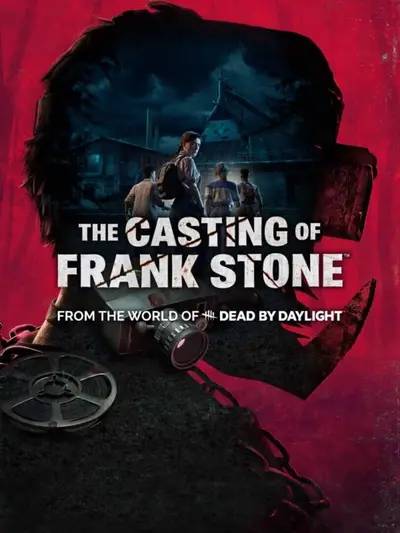
The Casting of Frank Stone
62Quick answer
Quick answer
The Casting of Frank Stone is een sfeervolle horroradventure die vooral scoort met zijn productie, wereldopbouw en brute, filmische momenten. Tegelijk blijft het verhaal vaak te afhankelijk van referenties en voelt de interactie te mager om echt boven het genregemiddelde uit te stijgen.
62: sterk in sfeer en afwerking, maar de beperkte interactiviteit en wisselende pacing drukken het totaal naar een nette middenmoot.
The Casting of Frank Stone is the kind of horror adventure that shows how far strong direction, atmosphere, and a few well-placed shocks can carry a game. It also exposes the limits of the format it belongs to. Supermassive Games still knows how to stage a scene, how to make a hallway feel unsafe, and how to land a gruesome reveal with enough confidence to make you flinch. There is real craft here. The problem is that craft alone does not always add up to a story with enough bite.
What remains is an experience that often looks impressive and frequently feels effective, but rarely escapes the familiar structure of the genre. The Casting of Frank Stone is not a game that constantly surprises with new systems or unexpected forms of interaction. It leans heavily on presentation, tension, and the appeal of its world. For fans of narrative horror, that may be enough to stay engaged, but it also means the game becomes vulnerable whenever the pacing dips or the characters fail to hold your attention.
Atmosphere and presentation
The game’s biggest strength is its presentation. Cedar Hills feels like a place where something has gone fundamentally wrong, and the game uses that unease well with dark interiors, strong contrast, and carefully placed light sources that keep the entire experience under a constant cloud of dread. Not every moment needs a jump scare to create tension. Often, it is the silence, the stillness, and the way the camera lingers on a detail that make the atmosphere work.
That visual approach is especially effective. The lighting is often excellent, with shadows that conceal just enough to keep you curious without making the scene unreadable. The production values are also solid across the board: facial animation, environments, and general polish all give the game a professional sheen that suits its ambitions. When the horror does decide to strike, it usually does so without hesitation. The violent moments are graphic and deliberate, and because the build-up is often so controlled, those bursts hit harder than they otherwise might.
The world itself also has a distinct identity. The lore connections are not just background dressing; they give the setting a sense of history and weight. Cedar Hills is not merely a haunted town, but a place where violence, trauma, and supernatural unease have accumulated over time. For players who enjoy connecting dots and digging into continuity, there is plenty to uncover. That makes the game more interesting than many other linear horror adventures, even when the story itself does not always dig as deeply as it could.
Story and themes
At the heart of the game is the shadow of Frank Stone and the way his violent legacy echoes through generations. That is a strong premise because it frames horror not just as a monster or a killer, but as an inheritance. The game suggests that violence leaves marks on families, communities, and perhaps even reality itself. On paper, that is a compelling foundation for a horror story, and at times the game does manage to evoke something genuinely eerie and mythic.
Still, the execution is not always as sharp as the premise. The game often leans heavily on recognition, context, and franchise echoes. As a result, the story can feel more like an expansion of an established mythology than a fully self-contained narrative. That will not bother players who are already invested in the universe, but it does mean the emotional core does not always come through as strongly as it should. The ideas are there, the mood is there, but the script does not always have the precision needed to make them resonate.
That is a shame, because when the game slows down for a well-built scene, its themes do land. The combination of guilt, legacy, and supernatural threat gives The Casting of Frank Stone more weight than a standard slasher setup. The issue is that the game does not always give those ideas enough room or clarity to fully develop. Some twists feel more functional than inevitable, as if the plot is focused on hitting key beats rather than deepening its central concerns.
Structure and interactivity
Like many Supermassive games, this one is more about participation than true play. You walk through environments, inspect objects, make choices, and react to quick prompts. It all works, but it is rarely exciting in its own right. The interactivity is serviceable and neatly implemented, but not especially rich. If you were hoping for a more demanding survival-horror experience with deeper systems, more improvisation, or a stronger sense of mechanical pressure, this is not that game. The Casting of Frank Stone wants to tell a story and uses the player as a participant, not as a fully empowered survivor.
That creates a pacing problem. Some chapters build tension nicely, giving the story room to breathe before the next ugly turn. Others stretch a little too long, and the rhythm starts to sag. The game is not short enough to hide those dips, but it is also not mechanically varied enough to keep every stretch feeling fresh. The result is an experience that is consistently competent, but only occasionally thrilling.
The limited interactivity has another consequence: the tension depends heavily on how invested you are in the characters and the situation. If the game does not grab you on that level, there is not much else to carry the longer scenes. The suspense then comes more from direction than from your own actions. That is not necessarily a flaw, but it does make the experience vulnerable to moments when the formula starts to show.
Characters and dialogue
The cast is one of the areas where The Casting of Frank Stone is least convincing. Some characters do enough to keep scenes moving, but the dialogue is not always natural and the relationships often feel underwritten. That is not unusual for this genre, where archetypes and quick readability often matter more than subtle character work. Even so, the issue stands out here because the game spends so much time on conversation, reaction, and observation. If the dialogue does not land, each scene becomes harder to carry.
That does not mean the cast is completely flat. There are moments when the interactions generate enough tension or humanity to keep you invested. But too often the characters settle into functional roles: the skeptic, the worried friend, the one hiding something. That leaves less emotional friction than the game needs. Since so much of the plot depends on the impact of what happens to these people, it is a problem when they do not feel vivid enough to make those events hit with full force.
The writing itself can also be stiff. Sometimes a scene feels like it exists mainly to deliver information or move the plot to the next beat. That makes the game less alive than it looks. The presentation may be polished, but the human side of the story often lags behind.
Pacing, length, and replay value
One of the surprises of The Casting of Frank Stone is its length. It is clearly longer than many people would expect from a Supermassive title and sits closer to The Quarry than to the shorter Dark Pictures entries. Depending on how thoroughly you explore, you can easily spend six to eight hours with it. That length is not a problem in itself; the game has enough atmosphere and world-building to justify it. But not every hour is equally strong.
Because the mechanical variety is limited, the slower or more repetitive stretches stand out more. The game has moments where everything clicks: the tension, the lighting, the music, the sense of threat. It also has passages where you are mostly waiting for the next major scene to arrive. That makes the experience less tight than it could have been. Replay value comes mainly from seeing alternate choices and outcomes, but the underlying structure remains familiar and cautious.
There is some value in revisiting the game once you understand how its systems and choices work. A second run can reveal a little more nuance in how certain scenes are shaped. Still, that is a benefit for dedicated players rather than something that fundamentally strengthens the whole experience.
Final thoughts
The Casting of Frank Stone is a solid and often striking horror adventure that excels most in atmosphere, presentation, and world-building. Cedar Hills is a convincing, ominous setting, and the game brings it to life with strong lighting, polished visuals, and effective horror direction. The lore connections also give it a distinct identity, making it feel like more than just another generic haunted-town story.
Against that, the interactivity remains limited, the pacing is uneven, and the cast is too often too flat to fully carry the narrative. As a result, the game stays a little too safely within the genre’s comfort zone. The end result is something you can respect and often enjoy, but not quite something that rises above the pack.
For Supermassive fans and for players who want atmosphere, lore, and an evening of dark suspense, The Casting of Frank Stone is worth your time. If you are hoping for a truly immersive, mechanically rich horror experience, though, you may find that this is a game that inspires admiration more often than genuine fear.
Verdict
Een degelijke, sfeervolle horroradventure die vooral overtuigt met presentatie, maar te veilig blijft om echt uit te blinken.
At a glance
Pros
- Sterke sfeer en overtuigende horrorregie
- Verzorgde visuals en effectieve belichting
- Interessante wereldopbouw en lore-verwijzingen
Cons
- Beperkte interactiviteit en weinig mechanische spanning
- Onregelmatig tempo met stukken die te lang aanvoelen
- Personages en dialogen blijven vaak te vlak
Screenshots
More reviews
Other recent game reviews on GAME-scanner.
There are no other reviews to show yet.