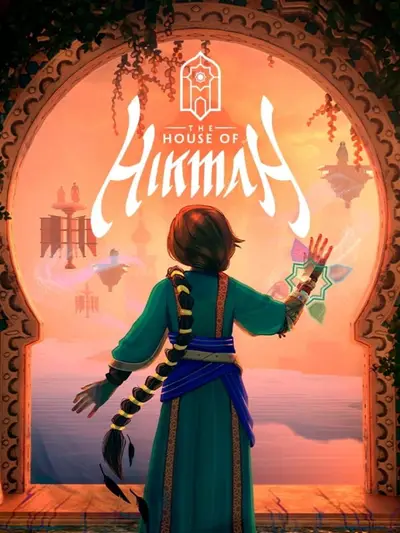
The House of Hikmah
74Quick answer
Quick answer
The House of Hikmah is een sfeervolle puzzle-adventure die grief, geschiedenis en verbeelding knap met elkaar verweeft. De game blinkt uit in presentatie, culturele rijkdom en een warme toon, al blijft de puzzelstructuur niet altijd even sterk of verrassend. Toch is dit een bijzondere reis die meer wil zijn dan alleen een reeks raadsels.
De score weerspiegelt een game met veel visie en echte emotionele kracht, maar ook met merkbare oneffenheden in puzzelvariatie en tempo.
A house built from memory
The House of Hikmah does not begin with spectacle so much as with weight. That is exactly right for a game about grief, legacy, and the uneasy process of moving forward when answers do not arrive cleanly. At its core, this is a narrative-driven 3D adventure set inside a beautifully imagined House of Wisdom, where scholars, ideas, and symbolic spaces all speak to the same larger question: how do we live with loss without letting it swallow everything else?
What makes the opening so effective is the way the game binds its emotional premise to its setting. The House of Hikmah is not merely a backdrop for puzzles; it is the point of the whole experience. Every corridor, chamber, and encounter feels like part of a larger conversation about knowledge, remembrance, and the fragile ways people preserve one another through stories. The result is a game that feels thoughtful from the first moments onward, and one that understands how atmosphere can carry meaning when it is built with intention.
That restraint is important. The House of Hikmah is not trying to overwhelm you with noise or constant escalation. It wants you to sit with its ideas, to notice the details, and to feel the emotional pressure of a world shaped by both intellect and absence. In a genre that often relies on abstraction, that sense of purpose gives the game a distinct identity.
Puzzles that speak to the story
The best puzzle adventures make you feel clever while also making the world feel more alive. The House of Hikmah often succeeds at both. Its challenges are usually grounded in the environment and in the people you meet, which means solving them feels like more than simply unlocking the next door. You are participating in the game’s ideas. You are learning about the historical figures it draws from, and you are also helping Maya, the protagonist, work through her own uncertainty and sorrow.
That connection between mechanics and theme is the game’s strongest design choice. When it clicks, the experience becomes quietly powerful. A solution does not just move you forward; it deepens the emotional texture of the scene. A conversation can reframe a puzzle, and a puzzle can in turn make a conversation feel more resonant. The game understands that the best form of storytelling in this genre is often interactive rather than declarative.
It also shows enough confidence to ask for attention and patience, which is welcome. The game does not treat the player like a passenger. It expects you to observe, think, and make connections. Still, the puzzle design is not uniformly brilliant. Some ideas are more memorable than others, and a few sequences lean a little too hard on familiar logic once the novelty wears off. The result is a strong central concept that is not always expanded with the variety it deserves.
Presentation with real care
Visually, The House of Hikmah is one of those games that immediately communicates sincerity. The 3D spaces are carefully built, with a strong sense of place and a clear eye for historical texture. The designs feel respectful rather than ornamental, and that matters. The game is not merely borrowing a setting; it is engaging with a cultural and intellectual tradition in a way that feels considered. That level of care gives the whole experience a sense of dignity.
The art direction does more than recreate a period aesthetic. It helps define the emotional tone of the game. Rooms feel curated but lived-in, grand but not cold, and that balance supports the story beautifully. There is a sense that every space has a memory attached to it, which makes exploration feel meaningful even when you are not actively solving a puzzle.
The audio work deserves equal praise. The music is excellent at reinforcing the tone without pushing too aggressively for emotion. It supports the contemplative rhythm of the game and helps the quieter moments breathe. Combined with the visuals, it creates a world that feels both grounded and slightly dreamlike, which suits a story about memory, scholarship, and legacy very well.
Historical figures as living presence
One of the most appealing aspects of The House of Hikmah is the way it brings historical figures into the adventure without reducing them to trivia. They are not there simply to be recognized. They have presence, personality, and a role in the game’s larger emotional and intellectual structure. That makes the experience feel richer than a standard educational homage.
These encounters also help the game avoid becoming too inward-looking. By tying Maya’s personal grief to a broader tradition of inquiry and collaboration, the story suggests that knowledge is not just something preserved in books or buildings. It is something passed between people, shaped by disagreement, care, and shared effort. That idea gives the game a warm human center. It is not just celebrating history; it is showing how history can still speak to present pain.
There is a real sense of cultural specificity here, and that specificity is one of the game’s greatest strengths. It does not feel generic or interchangeable. Instead, it feels rooted in a particular worldview and proud of that grounding. In a medium that still too often treats non-Western histories as exotic scenery, that commitment matters a great deal.
Where the design loses some momentum
For all its strengths, The House of Hikmah is not flawless. The pacing can be uneven, especially when the game shifts between exploration, dialogue, and puzzle solving. Some scenes are given just enough room to resonate, while others feel like they arrive or conclude a little too abruptly. That uneven rhythm keeps the game from fully settling into the emotional cadence it clearly wants.
There is also some repetition in the puzzle structure. The game has a strong central idea, but not every challenge expands on it in a fresh way. A few sections feel more functional than inspired, and that makes the overall experience less consistently surprising than it could have been. When the design is at its best, it is elegant and satisfying; when it is merely serviceable, the contrast becomes noticeable.
The story’s emotional intent is sincere, yet not every beat lands with equal force. At times the game states its themes a little too plainly, which slightly reduces the subtlety of its strongest moments. That does not undermine the sincerity of the writing, but it does mean the game occasionally trusts explanation more than implication. A little more restraint in those moments would have made the best scenes hit even harder.
Final thoughts
The House of Hikmah is a distinctive and often moving puzzle adventure that succeeds because it knows what it wants to say. Its historical framing, cultural specificity, and emotional focus give it a voice that stands apart from more generic genre fare. Even when the puzzle design stumbles or the pacing wobbles, the game’s atmosphere and intent remain compelling.
This is not an all-time great in the genre, but it is a very good one: thoughtful, beautiful, and unusually sincere. If you value games that connect mechanics to meaning, this is absolutely worth your time. If you want relentless challenge or a tightly escalating puzzle curve, you may find it a little uneven. But as a heartfelt journey through grief, knowledge, and remembrance, it leaves a strong impression.
Verdict
Een bijzondere, warme puzzelreis die niet altijd perfect schakelt, maar wel lang blijft nazinderen.
At a glance
Pros
- Sterke culturele en historische identiteit
- Puzzels die vaak goed aansluiten op verhaal en setting
- Prachtige artdirection en sfeervolle muziek
Cons
- De puzzelvariatie wordt soms wat herhalend
- Het tempo en de emotionele impact zijn niet altijd even consistent
Screenshots
More reviews
Other recent game reviews on GAME-scanner.
There are no other reviews to show yet.