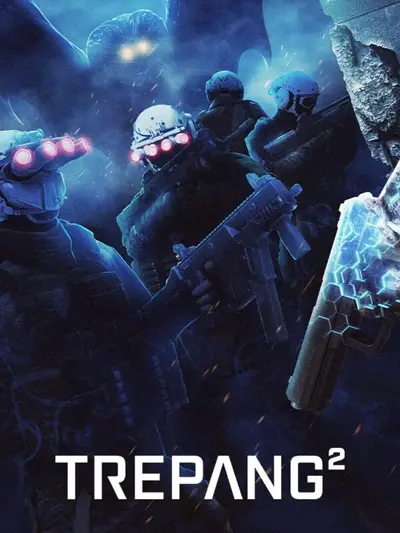
Trepang2
76Quick answer
Quick answer
Trepang2 is een brute, razendsnelle shooter die vooral uitblinkt wanneer je in een stroom van slow motion, shotgunblasts en explosies belandt. De game leunt zwaar op zijn combat en dat werkt meestal uitstekend, maar de dunne campagne, herhaling en wisselende sfeer houden hem net onder de top. Wie vooral een agressieve FPS-ervaring zoekt, krijgt hier veel plezier voor zijn tijd.
Een sterke combat-loop en veel directe fun tillen Trepang2 boven de middenmoot uit, maar de korte inhoud en herhaling houden het net onder de absolute top.
Trepang2 is a shooter that makes its intentions clear almost immediately: this is not a game interested in restraint, subtlety, or long-winded setup. It wants speed, impact, and the kind of combat flow that makes you feel like the most dangerous thing in the room. From the opening moments, Trepang2 builds around a simple but extremely effective fantasy: move fast, hit hard, slow time when needed, and keep the pressure on until every enemy is down. The result is a first-person shooter that is rough around the edges in places, but consistently thrilling where it matters most.
That core fantasy is what carries the entire experience. Trepang2 is at its best when it lets you sprint into a firefight, slide into cover, trigger slow motion, and tear through a group of enemies before they can fully react. It is a game built around momentum, and when that momentum clicks, it feels fantastic. The weapons have real weight, the gore reinforces every hit, and the whole system encourages you to play aggressively rather than cautiously. It is not elegant, but it is immensely satisfying.
Combat built on pressure and movement
The biggest strength of Trepang2 is how well it understands the basics of exciting shooter design. Good FPS combat is not just about aiming; it is about pressure, positioning, and the constant need to make decisions under fire. Trepang2 gets that. Enemies push you, flank you, and force you to keep moving. You are rarely allowed to settle into a safe rhythm for long, which keeps every encounter tense and physical.
That pressure is what makes the game so enjoyable to play. You are given enough tools to control the battlefield, but never enough to become complacent. A firefight in Trepang2 often looks chaotic from the outside, but it usually has a clear internal logic. You are reading the room, choosing when to commit, and deciding when to burn your slow-motion advantage. When the game is working, it creates a loop of movement and violence that feels almost musical in its timing.
It also helps that the game rewards boldness. Many shooters quietly encourage conservative play, but Trepang2 is much happier when you take the initiative. Push too hard and you can absolutely get punished, but play too timidly and the game loses much of its spark. The best moments come when you trust your reflexes, commit to a route through the room, and keep the action flowing without hesitation.
Slow motion as a real gameplay tool
The slow-motion mechanic is one of Trepang2’s best ideas because it is not treated like a flashy extra. It is woven into the entire combat loop and becomes essential to how you survive and succeed. In a game this fast, time manipulation is not just about style; it is about control. It lets you turn a messy situation into something readable, create openings, and line up shots that would otherwise be impossible in the middle of the chaos.
What makes it work is that the game does not let slow motion solve everything for you. It is most effective when used with intent: to break an enemy push, to reposition, or to land a crucial burst of damage before the pace snaps back into place. That keeps the mechanic from feeling like a crutch. Instead, it becomes part of your decision-making. The more you play, the better you get at timing it, and the more satisfying the combat becomes.
This is also where Trepang2’s learning curve shines. It is easy to understand at a basic level, but there is real room to improve. You start by surviving. Then you begin to anticipate enemy movement, manage your resources better, and use slow motion more efficiently. That progression gives the game a strong sense of mastery, even if the overall campaign is not especially long.
Weapons, feedback, and the joy of impact
A shooter like this lives or dies on feedback, and Trepang2 gets a lot of that right. The weapons feel heavy and distinct, with each one delivering a different kind of violence. Shotguns are brutal and immediate, automatic weapons provide a satisfying stream of suppression, and heavier guns bring the kind of destructive punch that makes encounters feel larger than life. Nothing here feels flimsy or decorative; every shot is meant to land with force.
The same goes for enemy reactions. Trepang2 does a good job of making hits feel meaningful through sound, animation, and gore. Enemies do not just disappear when they die; they react in ways that sell the power of your weapons and the danger of the situation. That feedback loop is a huge part of why the game is so enjoyable. Even when the mission structure is simple, the act of shooting remains compelling from start to finish.
There is also a pleasing sense of improvisation in how the game lets you approach fights. You are not locked into one style. You can rush, flank, pause, or burst through a room depending on what the moment demands. That flexibility keeps the combat from feeling mechanical. It is still a straightforward shooter, but it gives you enough room to express yourself within its rules.
Campaign length and repetition
For all of its strengths, Trepang2 does not have a huge amount of content, and that is where some of its limitations become obvious. The campaign is relatively short, and the structure can start to feel repetitive once the novelty of the combat loop settles in. The game often feels like a series of strong encounters rather than a broad, evolving journey. That is not necessarily a flaw in a shooter, but here it does mean the experience can run out of surprises sooner than you might hope.
Variety is the main issue. Trepang2 has enough ideas to stay engaging for a while, but not enough to constantly reinvent itself. Some levels and scenarios stand out, yet others feel like they are revisiting the same rhythm with only minor changes. Once you have understood the game’s language, it does not always have a lot of new things to say. For players who want a compact, high-intensity FPS, that may be perfectly fine. For anyone hoping for a longer arc or more structural ambition, it may feel a little thin.
Progression is similarly practical rather than exciting. You do unlock tools and weapons that expand your options, but the game is not especially interested in deep systems or elaborate customization. Its focus remains on the moment-to-moment action. That keeps things clean, but it also means the campaign’s long-term appeal depends heavily on how much you enjoy the core combat loop.
Presentation and atmosphere
Visually, Trepang2 is effective without being especially polished. It is not trying to compete with the most technically impressive shooters on the market, and that is fine. The art direction is dark, gritty, and functional, with enough visual flair to support the action. At its best, the game creates a strong sense of motion and violence. At its worst, the screen can become a little too cluttered, making it harder to read everything clearly during the busiest fights.
The atmosphere is more uneven. Trepang2 occasionally reaches for horror, paranoia, and a sense of unease, but those elements do not always land convincingly. The game is strongest when it embraces its action identity and weaker when it tries to suggest something deeper or more unsettling. That does not ruin the experience, but it does keep the presentation from becoming truly memorable beyond the combat itself.
Still, the game’s visual and audio design do enough to support the fantasy. The world feels harsh and dangerous, the gunfire has bite, and the gore reinforces the sense that every encounter is a violent struggle for control. It may not be a beautiful game in the traditional sense, but it is a very effective one.
Final verdict
Trepang2 is a very good shooter that knows exactly what it wants to be: fast, brutal, and relentlessly focused on satisfying combat. Its gunplay is excellent, its slow-motion system is genuinely useful, and its emphasis on aggressive, creative play makes it one of the more exciting FPS experiences in recent memory. When the game is in full flow, it is hard not to admire how cleanly it delivers on its core promise.
At the same time, it is also a game with clear limits. The campaign is short, the variety is modest, and the atmosphere does not always support the more ambitious parts of its presentation. Those shortcomings keep it from becoming a true genre landmark. Even so, Trepang2 is easy to recommend to anyone who wants a hard-hitting, high-speed shooter that prioritizes feel over fluff. It may not be the deepest FPS around, but it is one of the most immediately fun.
Verdict
Trepang2 is geen meesterwerk, maar wel een heerlijk harde shooter die zijn beste momenten vol overtuiging neerzet.
At a glance
Pros
- Razendsnelle, bevredigende schietactie
- Slow motion voelt essentieel en goed geïntegreerd
- Wapens en impact hebben veel gewicht
- De game beloont agressief en creatief spelen
Cons
- Campagne is aan de korte en dunne kant
- Herhaling sluipt erin door beperkte variatie
- Sfeer en horroraccenten zijn niet altijd overtuigend
Screenshots
More reviews
Other recent game reviews on GAME-scanner.
There are no other reviews to show yet.