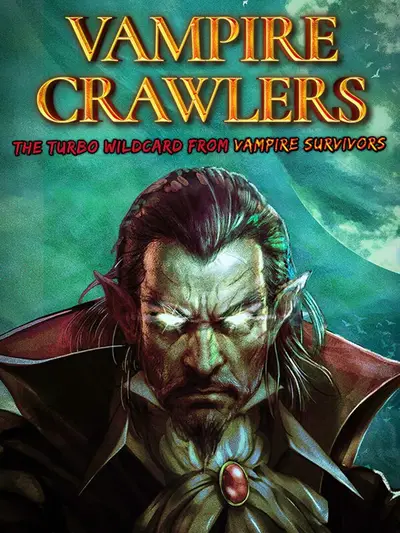
Vampire Crawlers: The Turbo Wildcard from Vampire Survivors
78Quick answer
Quick answer
Vampire Crawlers is een verrassend verslavende deckbuilder die het tempo van Vampire Survivors slim vertaalt naar turn-based dungeon crawling. De gevechten zitten vol sterke synergieën en het spel blijft lang nieuwe combinaties uitdelen, al voelt de basis op termijn wat herhalend. Wie graag bouwt, test en optimaliseert, krijgt hier een heerlijk compacte verslaving.
Sterke gevechtsflow, veel buildplezier en een paar duidelijke herhalingspunten maken dit een zeer goede game, net onder de absolute top.
Vampire Crawlers: The Turbo Wildcard from Vampire Survivors takes the chaotic appeal of Vampire Survivors and translates it into something different, but surprisingly natural. Instead of a screen packed with auto-firing projectiles, you get a roguelite deckbuilder built around sequencing, tempo, and squeezing every last bit of value out of synergies. On paper, that sounds like a major detour. In practice, it feels like the series has simply found another way to be compulsively readable, fast, and dangerously hard to put down.
That is the first and most important thing to understand about Vampire Crawlers: it is not trying to outgrow the identity of its predecessor so much as remix it. The game wants the same kind of “just one more run” momentum, but it delivers that rush through card play rather than bullet hell spectacle. The result is a compact, tactical experience that still feels generous, still feels energetic, and still knows exactly how to keep your attention locked on the next reward, the next unlock, and the next absurd combo waiting just around the corner.
The Turboturn makes every fight snap
The defining idea here is the Turboturn, and it is a very smart one. Combat is built around chaining cheap actions into stronger plays, turning each turn into a small engine-building puzzle. You are not just selecting cards from a hand; you are trying to create momentum. A low-cost setup card might enable a bigger attack, a defensive move might buy time for a combo to mature, and a well-timed sequence can make a battle feel like it is collapsing in your favor before the enemy has a chance to recover.
That structure gives the game a wonderful sense of rhythm. Fights are quick, but they are not mindless. You are constantly making decisions about whether to spend resources now or hold back for a more explosive payoff later. The best turns feel like you are barely keeping a machine together long enough for it to become unstoppable. That tension between control and improvisation is where Vampire Crawlers really shines.
It also helps that the game is excellent at making each decision feel meaningful without slowing the pace to a crawl. Many deckbuilders can become ponderous when they ask you to weigh too many variables at once. Vampire Crawlers avoids that trap by keeping the action brisk and the feedback immediate. You always know whether a turn is helping your plan or derailing it, which makes the whole experience feel clean, readable, and highly addictive.
Buildcraft is the real hook
If the Turboturn is the engine, then buildcraft is the fuel. Vampire Crawlers is at its best when it is feeding you new cards and nudging you toward combinations you had not considered before. The game is full of synergies, and it encourages experimentation in a way that feels genuinely rewarding rather than merely obligatory. A run rarely feels fixed from the start. Instead, it evolves as you discover which cards are pulling their weight and which ones can be turned into the backbone of something much stronger.
That makes the game especially appealing for players who enjoy testing ideas and watching a deck come together piece by piece. There is a real pleasure in finding a route that suddenly makes the whole run click. A card that seemed modest early on can become the missing link in a devastating chain, and the game is smart enough to keep offering those little moments of revelation. It is the kind of design that makes you feel clever without demanding encyclopedic knowledge.
At the same time, the game’s mechanical range is not as broad as the very best deckbuilders. The core loop is strong, but it is also fairly focused, and that focus eventually becomes a limitation. You can build in different directions, but the underlying structure remains familiar. That means the game’s appeal comes more from depth within a compact system than from a huge spread of radically different play styles. For many players, that will be enough. For others, it may leave the experience feeling slightly narrower than it first appears.
Progression keeps the loop alive
One of Vampire Crawlers’ smartest qualities is how well it handles progression. Even failed runs rarely feel wasted, because there is always something to carry forward: a new card, a new character, a new unlock, or a fresh possibility for the next attempt. The game understands that visible progress is one of the strongest motivators in a roguelite, and it uses that understanding to keep the loop compelling for a long time.
This matters because the game’s core pleasure is so closely tied to discovery. Every new unlock has the potential to change how a run unfolds, and that gives the progression system real weight. You are not just collecting content for the sake of a checklist; you are expanding the space of possible builds. That makes each return to the game feel worthwhile, especially in the early and middle stages when the number of viable combinations is still growing rapidly.
Eventually, though, the same strength begins to show its limits. Once the biggest surprises are behind you, the game can start to feel a little grindy. The rewards are still there, but they do not always hit with the same force as the first wave of discoveries. The loop remains satisfying, but it becomes more about refinement than revelation. That is not a flaw that breaks the experience, but it does mean the game is more likely to sustain your interest than to keep reinventing itself.
Presentation, readability, and tone
Visually, Vampire Crawlers leans into the recognizable charm of the series without overcomplicating the presentation. The dungeons are clear, the action is easy to read, and the interface does a good job of keeping the important information front and center. That clarity is crucial in a game like this, where the fun depends on understanding how cards, effects, and rewards interact at a glance. The game rarely gets in its own way.
The tone also helps sell the experience. There is a playful excess to the whole thing, as if the game is constantly inviting you to try one more absurd interaction. That sense of generosity is part of what makes it so easy to get pulled in. Even when the structure starts to repeat, the presentation keeps the experience lively enough to maintain momentum. It is not a game that relies on cinematic spectacle; it relies on clarity, pace, and the satisfaction of systems clicking together.
That restraint is a strength. By keeping the presentation focused, Vampire Crawlers makes room for the actual play to do the heavy lifting. The result is a game that feels polished without feeling overproduced, and energetic without becoming visually noisy.
Repetition, but the good kind for a while
The biggest question hanging over Vampire Crawlers is how long its formula can sustain itself. The answer is: quite a while, but not forever. The early hours are excellent because the game is constantly introducing new possibilities. Later on, the structure becomes more familiar, and the appeal shifts toward optimization and execution rather than surprise. That is still enjoyable, but it is a different kind of enjoyment.
For players who love tuning a build until it hums, that is not a problem. In fact, it is part of the appeal. The game gives you enough room to tinker that each run can feel like a new experiment, even when the broad shape of the experience remains the same. But if you are looking for a deckbuilder that keeps throwing radically different challenges at you, Vampire Crawlers may feel a little too content with its own rhythm.
Verdict
Vampire Crawlers: The Turbo Wildcard from Vampire Survivors is a strong, addictive roguelite deckbuilder that understands exactly how to turn momentum into obsession. Its Turboturn combat is fast and satisfying, its build synergies are rich enough to encourage real experimentation, and its progression system keeps the loop compelling for a long time. It is the kind of game that makes hours disappear without ever feeling careless about your time.
The caveat is that the core loop becomes somewhat repetitive, and the mechanical range is narrower than the very best games in the genre. Even so, the fundamentals are so solid that those limitations never fully outweigh the fun. This is a confident, well-built spin-off that carves out its own identity while preserving the addictive spirit of Vampire Survivors. If you enjoy deckbuilders, roguelites, or simply games that are excellent at making “one more run” feel irresistible, Vampire Crawlers is very easy to recommend.
Verdict
Een slimme, verslavende deckbuilder die net niet helemaal losbreekt, maar wel heel dicht in de buurt komt.
At a glance
Pros
- Verslavende Turboturn-gevechten met sterk tempo
- Heel veel build-synergieën en experimentruimte
- Progressie en unlocks houden runs lang aantrekkelijk
Cons
- De basisloop wordt na verloop van tijd wat herhalend
- Mechanische variatie blijft iets beperkter dan de beste deckbuilders
Screenshots
More reviews
Other recent game reviews on GAME-scanner.
There are no other reviews to show yet.