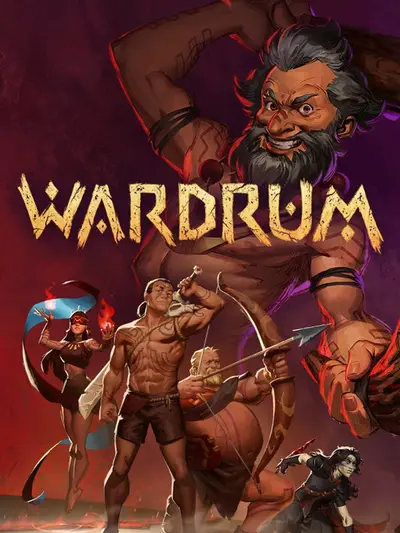
Wardrum
78Quick answer
Quick answer
Wardrum is een verrassend sterke mix van tactiek, ritme en roguelite-spanning. Het spel vraagt veel van je, maar beloont spelers die het tempo leren lezen met een eigenzinnige en slimme gevechtslus. Niet alles is even toegankelijk, maar de combinatie voelt zelden als een gimmick.
Een sterke, frisse mix met veel tactische diepgang en wat ruwe randen, goed voor een solide 78.
Wardrum is the kind of game that announces its identity early and then spends the rest of the experience proving it was not a gimmick. On the surface, it sounds like a risky mash-up: a tactical turn-based roguelite where you lead a tribal warband through a harsh fantasy world, all while timing attacks to the beat of the Wardrum. In practice, though, the concept lands because the game treats rhythm and strategy as equal partners. It is not a tactics game with a rhythm layer pasted on top, and it is not a rhythm game pretending to have depth. It is both at once, and that commitment gives it a freshness that is genuinely hard to find.
That freshness matters because the indie roguelite space is crowded. Plenty of games have clever hooks, but fewer manage to make those hooks feel essential to every decision you make. Wardrum does. From the first few encounters, it becomes clear that success depends on more than picking the right target or building the strongest squad. You have to think in terms of tempo, sequence, and timing. You are constantly balancing the tactical and the musical, and when the two click together, the result is more satisfying than either system would be on its own.
Rhythm-first combat
The best thing Wardrum does is make the beat matter in a way that genuinely changes how you play. A lot of rhythm-adjacent games use timing as a bonus multiplier or a flashy extra. Here, the beat is the structure that everything else hangs from. Attacks, combos, and action inputs are all tied to the rhythm, which means your choices are never just about raw power. A strong move used at the wrong moment can be less effective than a simpler action that lands perfectly on time. That creates a constant, low-level pressure that keeps battles tense and engaging.
What makes this work is that the rhythm layer is not isolated from the tactical layer. Positioning still matters. Turn order still matters. Enemy patterns still matter. But instead of replacing strategy, the beat sharpens it. You are not only planning what to do; you are planning when it should happen and how it fits into the flow of the encounter. That extra dimension gives even familiar turn-based situations a different texture. A fight that might have felt routine in another game becomes a small performance where precision is part of survival.
As your warband grows, the system opens up in satisfying ways. There is enough variety in heroes, abilities, and charms to support different strategic approaches, and that variety is important because it keeps the game from collapsing into a single optimal style. Some squads want to stay aggressive and maintain momentum. Others are built around control, defense, or endurance, using the rhythm system to create openings rather than brute-forcing them. That flexibility gives Wardrum real replay value, especially for players who enjoy testing different builds and seeing how they affect the feel of combat.
The downside is that the game can be demanding in ways that may not suit everyone. The attack inputs are occasionally strict, and the early hours can feel punishing while you are still learning how the beat interacts with the tactical layer. Wardrum is not especially interested in easing you in gently. It expects you to pay attention, adapt quickly, and accept that mistakes are part of the learning process. For some players, that challenge will be the main appeal. For others, it may be the barrier that keeps the game at arm’s length.
Squad building and strategic variety
Wardrum’s squad-building systems are one of the reasons the game remains interesting beyond its initial novelty. The available heroes, abilities, and charms give you enough room to shape a warband around your preferred style, and the game benefits from that openness. It does not force every run into the same mold. Instead, it encourages you to think about synergy, tempo, and how different units support one another under pressure.
That matters because the rhythm mechanics make composition more meaningful than in a standard tactics game. A squad is not just a collection of stats and special moves; it is a group of performers that has to stay in sync. Some characters may excel at keeping pressure on enemies, while others are better at setting up the right moment for a decisive strike. The best builds are the ones that make the rhythm feel natural, where your actions flow into each other instead of fighting against the beat.
There is also a pleasing sense of adaptation here. Because Wardrum is a roguelite, you are not always handed the perfect tools for your preferred strategy. Sometimes you have to make do with limited gear or an awkward set of options, and that can be frustrating. But it also pushes you to think more creatively. Rather than waiting for ideal conditions, you learn to build around what the run gives you. That keeps the game from becoming too predictable and gives each attempt its own character.
Roguelite structure and difficulty
Wardrum’s roguelite framework fits its premise well. You are leading a warband through a hostile world, failing, learning, and coming back stronger. That loop feels appropriate for a game about persistence and adaptation. Progress is not only about unlocking more power, but also about understanding the systems more deeply. Every run teaches you something about enemy patterns, timing windows, or the kind of squad composition that suits your instincts best.
Still, this is not a forgiving game. The difficulty curve is steep, and the game often feels brutal until the mechanics start to click. That can make the opening hours rough, especially if you are not already comfortable with both tactics and rhythm inputs. Wardrum asks a lot from the player, and it does not always soften the blow when you fall short. Runs can end quickly if your timing slips or if you misread a fight, and that harshness is part of the design.
For the right audience, though, that harshness is exactly what makes the game rewarding. Because success is hard-won, it feels earned. You are not just accumulating power; you are mastering a system. By the time you start reading enemy behavior instinctively and landing attacks with confidence, Wardrum has already transformed from a strange experiment into a genuinely satisfying tactical challenge. The game’s difficulty is not a flaw so much as a filter: it will appeal most to players who enjoy learning under pressure.
Presentation and atmosphere
Visually and musically, Wardrum is effective without being especially memorable. The presentation is solid and coherent, but it does not chase spectacle. That restraint works in the game’s favor because clarity is more important here than flash. The minimalist soundtrack keeps the beat readable, which is crucial for a game built around timing. It supports the action instead of competing with it, and that makes the rhythm mechanics easier to follow even when battles become more complex.
The fantasy world itself is suitably bleak, with a harsh tone that matches the idea of a land infected by dark sorcery. The atmosphere is consistent, and the game knows how to sell the feeling of a warband pushing through dangerous territory. At the same time, the worldbuilding is not especially inventive. It gets the job done, but it does not leave a strong impression once you step away from the combat. The same is true of the broader presentation: competent, fitting, and well aligned with the mechanics, but not the sort of thing that will linger in your memory for its own sake.
That limitation does not sink the game, because Wardrum’s strongest ideas are mechanical rather than narrative or visual. Still, it does mean the experience is carried more by what you do than by what you see or learn about the world. If you are looking for a richly detailed setting or a particularly striking art direction, this may feel a little understated.
Verdict
Wardrum succeeds because it understands both halves of its identity equally well. It is an original blend of rhythm mechanics and turn-based tactics, and it does not compromise either side to make the mix work. The combat is rewarding once you learn the timing and enemy patterns, the squad-building options offer real strategic variety, and the roguelite structure gives the game a strong sense of progression. At the same time, the steep learning curve, demanding inputs, and occasionally limited presentation keep it from being an easy recommendation for everyone.
For players who enjoy difficult systems and like the idea of strategy being tied directly to rhythm, Wardrum is well worth the effort. It is refreshing, smart, and often genuinely fun in a way that feels distinct from the usual roguelite formula. It may not be the most polished or the most memorable game in every respect, but it is one of the more interesting ones. And in a crowded genre, that kind of identity goes a long way.
Verdict
Wardrum is een eigenzinnige tactische roguelite die zijn sterke idee bijna helemaal waarmaakt.
At a glance
Pros
- Originele mix van ritme en tactische turn-based gevechten
- Sterke beloning voor spelers die timing en patronen leren
- Veel ruimte om squads en builds op verschillende manieren in te vullen
Cons
- Steile leercurve en soms lastige invoer
- Wereldbouw en presentatie zijn degelijk maar niet bijzonder memorabel
Screenshots
More reviews
Other recent game reviews on GAME-scanner.
There are no other reviews to show yet.