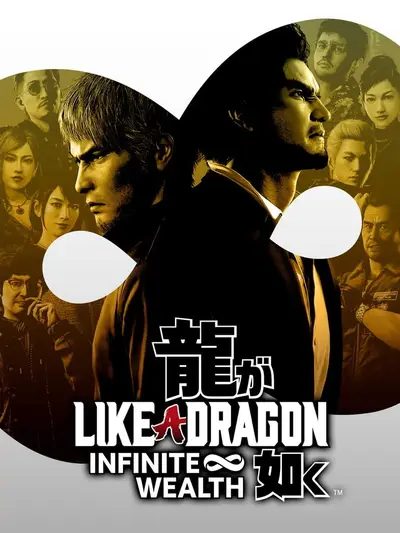
Like a Dragon: Infinite Wealth
87Quick answer
Quick answer
Like a Dragon: Infinite Wealth is een enorme, vaak briljante mix van emotioneel drama, absurdistische humor en verrassend verfijnde turn-based gevechten. De combinatie van Ichiban en Kiryu werkt uitstekend, al voelt de game op momenten ook te breed en te lang. Wie zich laat meeslepen, krijgt een van de rijkste RPG’s van de laatste jaren.
87: een bijna topklasse RPG met uitzonderlijke personages, sterke gevechten en net genoeg overdaad om af en toe te schuren.
A sequel that dares to think bigger
Like a Dragon: Infinite Wealth is not content to simply continue the story of its predecessor. It wants to prove that the series can still grow in scale, confidence, and emotional reach without losing the strange, heartfelt identity that made it special in the first place. The move to Hawaii gives the game an immediate sense of freshness, replacing familiar urban grit with bright streets, tourist energy, and a sun-soaked atmosphere that feels both inviting and slightly off-kilter. At the same time, bringing Kazuma Kiryu back into the spotlight alongside Ichiban Kasuga gives the whole adventure a weight that goes far beyond its often goofy surface.
That contrast is what makes Infinite Wealth so compelling. It is a game that can be sincere, ridiculous, melancholy, and exuberant within the same stretch of play, and it usually manages those shifts with real confidence. A serious conversation can be followed by a bizarre side activity, then a dramatic cutscene, then a battle against a gang of absurdly dressed enemies, and somehow the rhythm still works. The series has always thrived on that kind of tonal whiplash, but here it feels especially polished. The result is a sequel that does not just add more content; it expands the emotional and mechanical vocabulary of the whole franchise.
Ichiban and Kiryu give the story its heart
The biggest reason Infinite Wealth works is the relationship between its two leads. Ichiban remains one of the most likable protagonists in modern RPGs: warm, impulsive, optimistic, and endlessly willing to believe in people. Kiryu, by contrast, brings a quieter and more reflective presence, carrying the emotional history of an entire series on his shoulders. Put together, they create a dynamic that gives the game much of its dramatic power. This is not just a story about another crisis to solve; it is also about legacy, regret, loyalty, and what it means to keep moving when life has already taken so much from you.
The game understands that these themes need room to breathe. Conversations are allowed to run long enough to feel natural, and scenes often linger just enough for a glance or a pause to matter. That patience pays off, especially when the script lets Ichiban’s forward momentum collide with Kiryu’s more burdened worldview. Their differences are obvious, but the game uses them well, turning them into a source of both humor and emotional resonance. The story can be messy at times, but the central bond is strong enough to hold everything together.
Turn-based combat that finally feels fully evolved
The combat system is a major step forward for the series’ turn-based direction. Building on the previous entry, Infinite Wealth adds more meaningful movement, stronger positioning, and better environmental interaction, making battles feel more dynamic and spatially aware. Fights are easier to read and more satisfying to navigate because you are not just selecting attacks from a menu; you are also thinking about where characters stand, how enemies cluster, and how the battlefield itself can be used to your advantage.
That extra layer of movement gives encounters a better sense of flow. Characters feel distinct, attacks have more personality, and the game does a great job of making even long battles feel lively. The animation work helps a lot here, as does the sheer confidence of the presentation. Special attacks are flashy without becoming incomprehensible, and the party system encourages experimentation rather than locking you into one obvious solution. It is a combat model that feels like it has finally settled into its identity.
Still, the system is not flawless. The balance can wobble, and some stretches feel more like mandatory grind than meaningful challenge. A few dungeons and progression gates seem designed to stretch the runtime rather than sharpen the experience, which can make the pacing feel uneven. But even with those rough edges, this is one of the most satisfying turn-based systems in a contemporary RPG, and easily one of the series’ best mechanical achievements.
A world overflowing with personality
If there is one thing Infinite Wealth never lacks, it is content. The game is enormous, and it is packed with side stories, minigames, optional systems, and odd little diversions that range from charming to completely unhinged. What makes that abundance work is that so much of it feels like it belongs. The optional content is not just there to pad the runtime; a lot of it adds texture to the world or reveals new sides of the cast. That sense of personality is one of the series’ defining traits, and it is on full display here.
Hawaii plays a huge role in making that content land. The setting brings a different mood to the series, with bright colors, open spaces, and a more relaxed surface energy that contrasts nicely with the chaos underneath. It feels like a place where the absurdity of the Like a Dragon universe can breathe in a new way. The game still has the dense urban feel, the eccentric locals, and the constant sense that something strange is always around the corner, but the backdrop gives it all a fresh flavor.
That said, the game’s abundance can also become its biggest weakness. Infinite Wealth is sometimes simply too long and too broad. Not every detour earns its place, and not every chapter feels equally necessary. There are stretches where the game seems to be stretching itself out, and the pacing suffers as a result. For players who love huge RPGs, that may be part of the appeal. For others, it can make the experience feel overextended, especially when the main story momentum slows down to accommodate another side path or another mandatory detour.
Presentation, atmosphere, and tonal control
Visually, the game makes excellent use of its new setting. Hawaii gives the world a brighter palette and a different kind of energy, while still leaving room for the series’ trademark weirdness. The environments feel alive, the characters are expressive, and the combat presentation has enough style to keep even routine encounters visually engaging. The soundtrack and sound design also do a lot of heavy lifting, shifting smoothly between emotional scenes, comedic chaos, and high-energy battles.
The direction of the cutscenes deserves special mention. The game is not afraid to let people talk, argue, reflect, and sit in silence for a moment, and that restraint helps the emotional beats land. Kiryu’s presence gives the story a reflective, almost elegiac quality, while Ichiban keeps the whole thing from becoming too heavy. Their chemistry is the emotional engine of the game, and it is strong enough to make even the longer stretches feel worthwhile.
The cost of ambition
The main criticism of Like a Dragon: Infinite Wealth is not that it lacks ideas, but that it sometimes has too many of them. The game is packed with systems and content, but not every one of them is equally polished, and not every narrative detour feels essential. Some balance choices are a little rough, and some sections are clearly designed to extend the runtime rather than improve the experience. That can make the game feel bloated, especially if you prefer tighter pacing.
Even so, it is hard not to admire the sheer confidence on display. This is a huge, content-rich RPG with a memorable cast, a combat system that meaningfully evolves the series, and a story that knows how to be funny and heartfelt without collapsing under the weight of either. It is messy in places, but it is also generous, ambitious, and often genuinely moving. Few games this large feel this personal.
Like a Dragon: Infinite Wealth is an oversized but outstanding adventure that turns most of its excess into charm, depth, and emotional payoff.
Verdict
Een uitbundige, emotioneel rijke RPG die zijn overdaad meestal omzet in pure kracht.
At a glance
Pros
- Sterke chemie tussen Ichiban en Kiryu
- Turn-based gevechten zijn verfijnd en tactisch leuk
- Enorme hoeveelheid side content met veel karakter
- Hawaii geeft de serie een frisse sfeer
Cons
- De game is soms te lang en te breed opgezet
- Niet elke omweg of balanskeuze voelt even strak
Screenshots
More reviews
Other recent game reviews on GAME-scanner.
There are no other reviews to show yet.